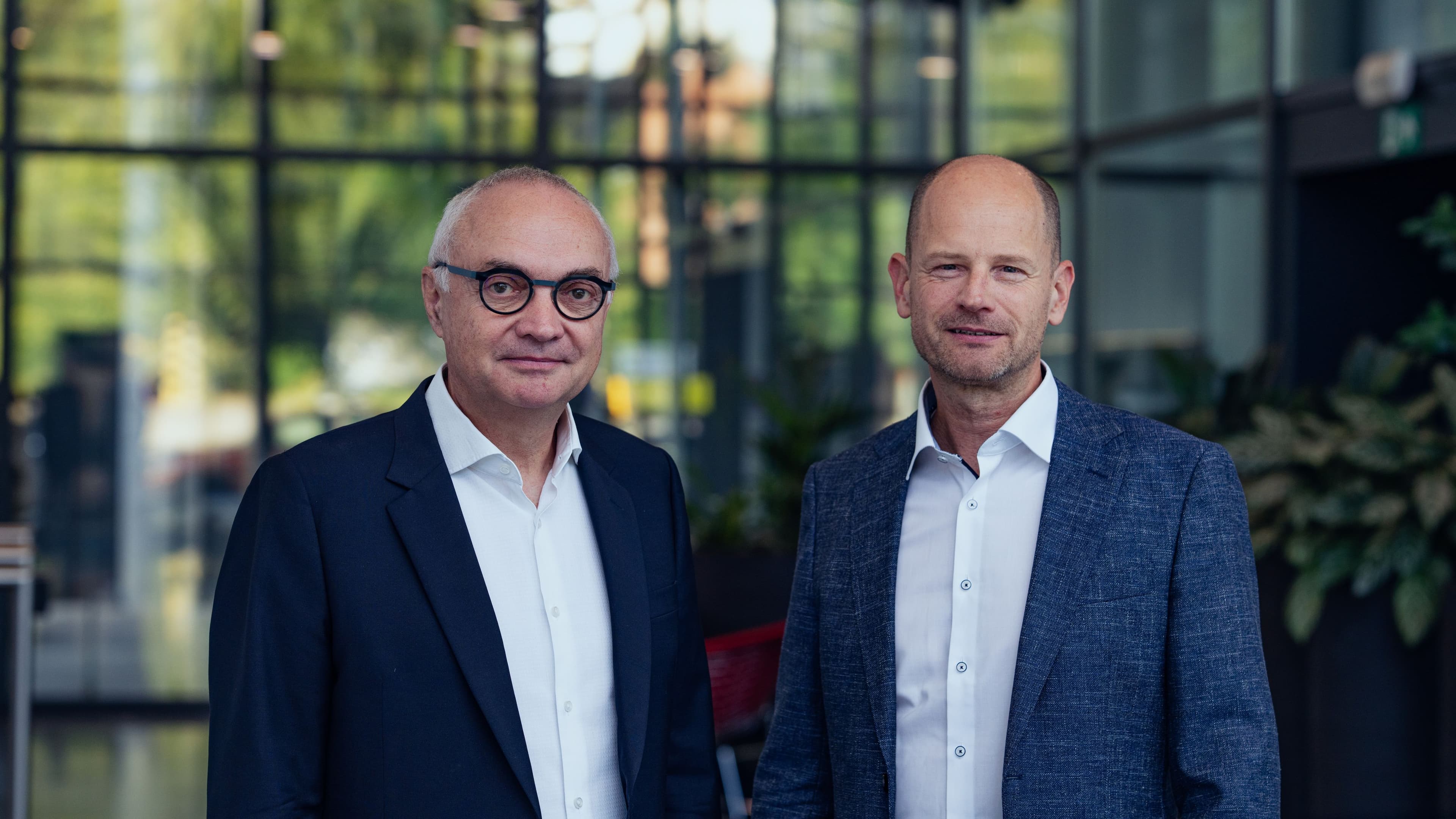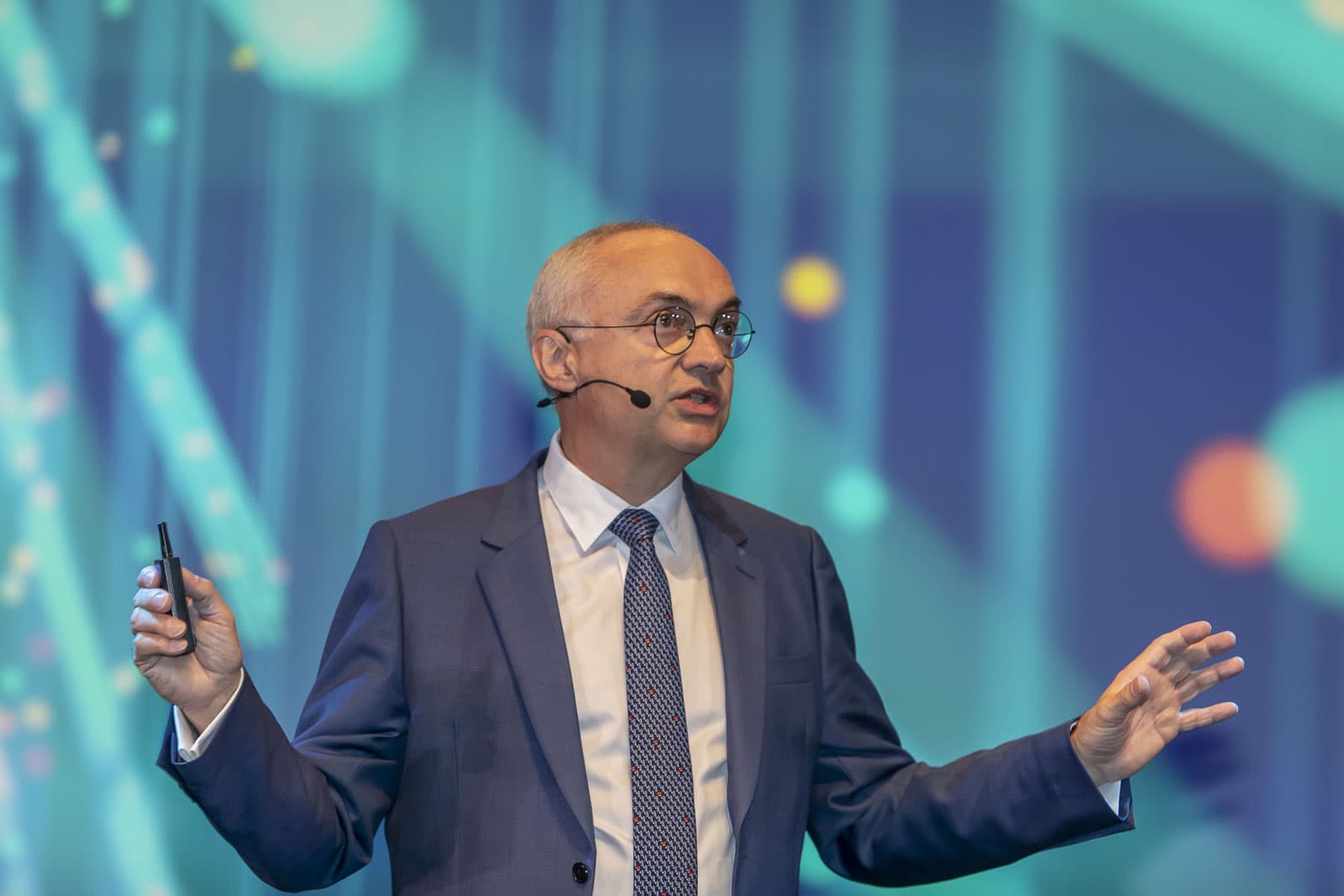
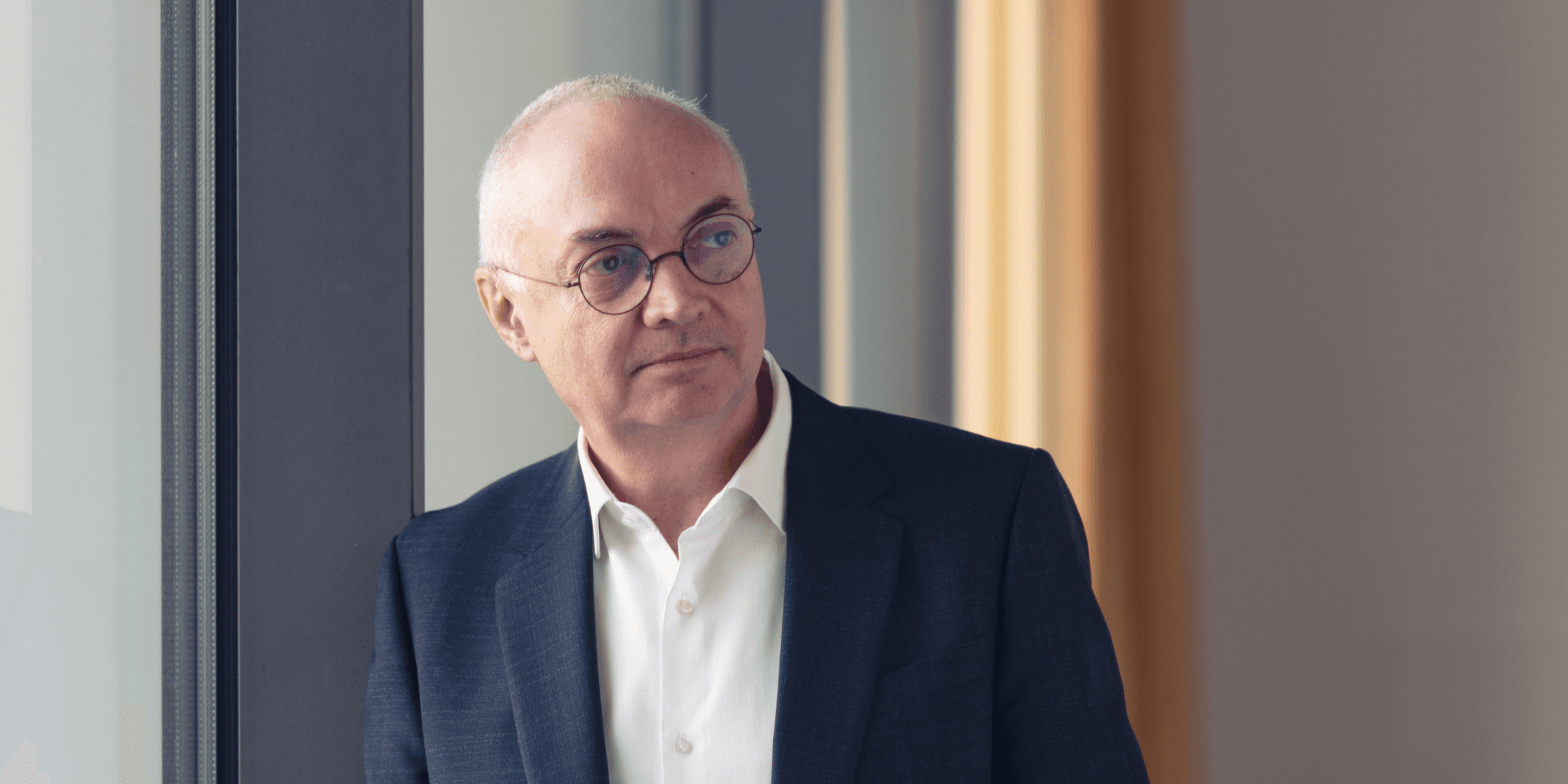

Luc Van den hove has been part of imec for more than forty years, including a tenure as imec’s CEO since 2009. Starting April 2026, he steps into his new role as Chairman of imec, a position where his experience and international network will continue to be invaluable. At the same time, he looks forward to spending more time with his family – particularly his three grandchildren – and to exploring (new) personal interests.
Before turning the page, we take a moment to reflect on Luc’s exceptional journey: from a young researcher to the CEO of the world's leading chip R&D lab.
You have been with imec since its inception in 1984. How did you come to join the organization?
Luc Van den hove: “In 1983, I graduated from Belgium’s KU Leuven with a degree in electrical engineering. My master's thesis had been supervised by Gilbert Declerck, who would later – from 1999 to 2009 – serve as imec's CEO. As such, I was fortunate to become involved early on with the group of pioneers laying the groundwork for imec. And when imec was officially founded in 1984, I joined through a research fellowship.”
“As a young engineer, I was eager for a challenge. Within imec’s close-knit and highly ambitious environment, I immediately felt at home."
Speaking of ambition and challenges: today we are on the verge of unlocking 2nm chip technology. But what did the semiconductor landscape look like when you joined imec in the mid-1980s? What were the industry’s key targets at the time?
Luc Van den hove: “In 1984, we had just completed the development of 3-micron CMOS technology and had – quite ambitiously – started pursuing the 1.25-micron milestone.”
“While that may sound almost trivial today, breaking the 1-micron barrier was a major target back then. Since then, we have succeeded in shrinking chip technology by a factor of a thousand. Even for someone who has witnessed this evolution from the front row, that is mind-blowing.”
“It is also important to understand that imec’s reputation was not built overnight, or without significant effort. In those early years, we had to fight hard for recognition. For example, I still vividly remember how proud we were whenever one of our papers was accepted at a top-tier international conference – something that has become a given today. In other words, becoming the world's leading chip R&D lab is truly a testament to imec’s extraordinary journey over the past decades – and to the progress we have made, not only in terms of building technological leadership, but also when it comes to credibility, reputation, and global recognition.”
Let us go back to those early years. What were you working on as a young researcher?
Luc Van den hove: “At the time, my work focused on silicides – compounds of silicon and a metal – which are widely used in the chip industry because they feature a much lower electrical resistance than pure silicon. This makes them highly efficient conductors. That research later became the foundation of my PhD.”
“It was a period marked by intense curiosity and continuous learning. Every summer, Gilbert spent a sort of sabbatical at Eastman Kodak in Rochester, in the United States. I joined him on several occasions, often with our families. Looking back, I would strongly encourage young researchers to seek out experiences like these. They provide a valuable reality check by exposing you to the real challenges that commercial companies face, while allowing you to get to know your colleagues in a completely different context. Experiences like these create bonds that last a lifetime.”
Under Gilbert Declerck’s guidance, you also developed an increasingly commercial mindset. How did that unfold?
Luc Van den hove: “That journey actually began while I was still working on my PhD. Gilbert asked me to negotiate with major international chip companies, and convince them to install their tools in the imec cleanroom. Honestly, that responsibility shaped my entire career: alongside my role as a researcher, I was leading a team – and suddenly, I could also sharpen my negotiation and commercial skills. I had no idea then just how invaluable those skills would become. But one thing is certain: it was quite a challenge!”
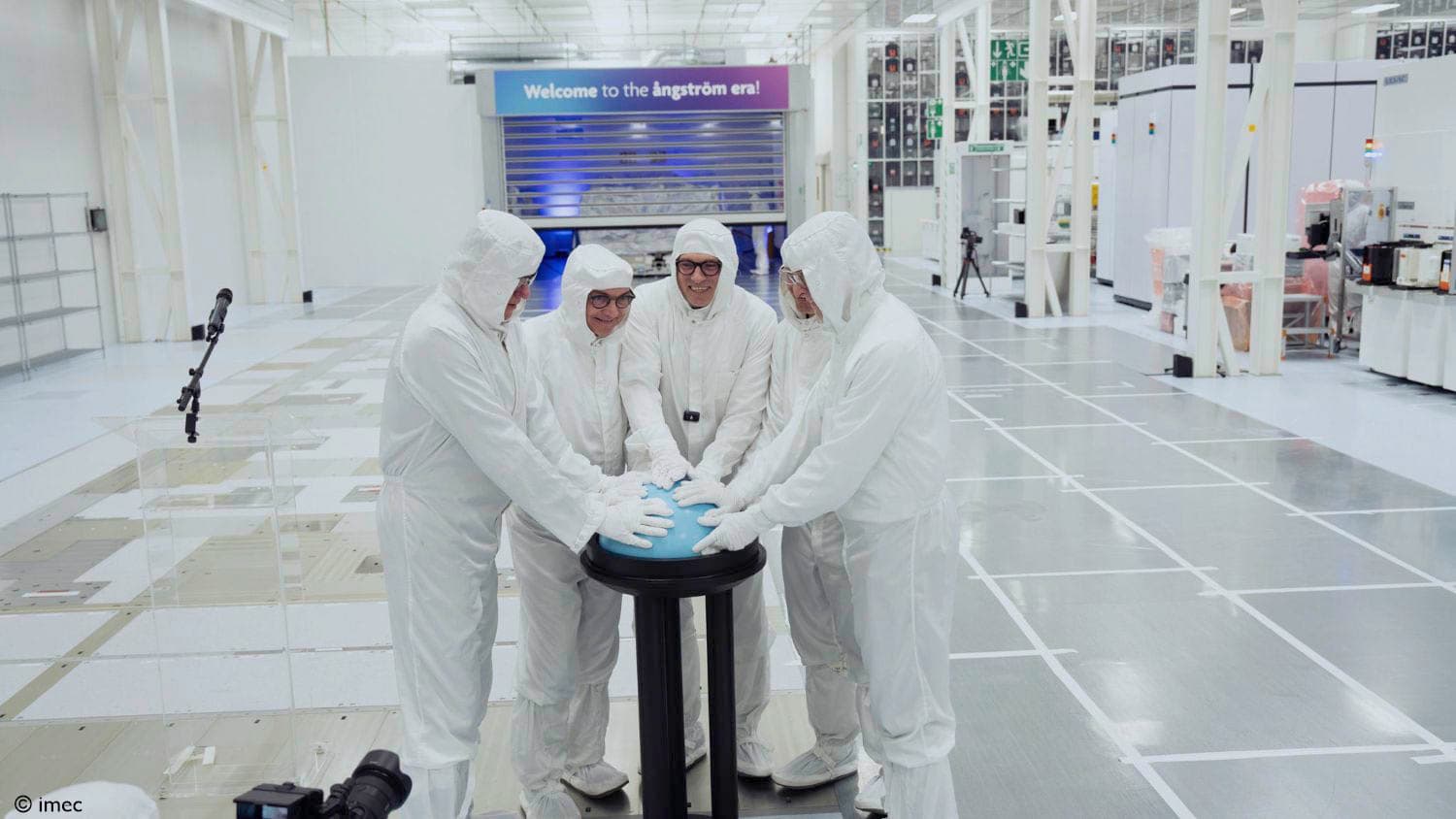
“The negotiations with Philips – essentially a core partner 'avant la lettre' – fit perfectly into that story as well. As Gilbert’s right-hand man, I negotiated an agreement that brought Philips into imec’s various strategic research programs, and led them to assign a hundred employees to work in our 200mm cleanroom. That collaboration model later became the blueprint for our core partner program, which soon drew companies such as Intel, Samsung, TSMC, and many others. Looking back, that was a true turning point for imec: it laid the groundwork for the collaboration model that still defines us today.”
Was this the beginning of your path toward becoming CEO?
Luc Van den hove: “Becoming CEO certainly was not on my mind at the time. But by working closely with people like Gilbert Declerck, I learned a great deal – from negotiating with partners to thinking strategically about imec’s long-term future. Another defining moment was the decision in 2004 to move from 200mm to 300mm wafers. It was a major and risky investment that required the construction of an entirely new cleanroom. Gilbert and I were strong advocates of it, while quite a few colleagues were rather skeptical. But it was essential to keep pace with our partners, who were making the same transition.”
“Each of those choices has, in its own way, been crucial for imec’s survival and later success. Experiencing that from the front row – and learning how to bring everybody along – was an incredibly valuable lesson.”
Do you remember being asked to become CEO?
Luc Van den hove: “Yes, very clearly. It was around 2007, after a day full of meetings with Intel’s R&D team in Portland. That evening, while the two of us were having dinner, Gilbert asked whether I would be willing to succeed him. Of course, the final decision rested with the Board of Directors, and in the months that followed I went through a thorough evaluation and coaching process. But to me, the idea immediately felt like a natural next step.”
How do you look back on your 17-year tenure as CEO? What evolution has imec undergone during that period?
Luc Van den hove: “One of my main priorities was to continue to professionalize the organization – building on the work of my predecessors – and to further strengthen our international impact.”
“The foundations for this were, of course, already laid around the turn of the century, but over the past 17 years we have significantly accelerated that process. We did so by aligning our research even more closely with the needs of commercial players, by bringing together the most advanced research infrastructure for semiconductor R&D, and by adopting a way of working that has few equals in our industry. Our partners highly value all these elements. It is this unique combination of scientific excellence, professional expertise, and state‑of‑the‑art infrastructure that has enabled imec to grow into an essential link in the international microchip ecosystem.”
“At the same time, we also boosted our local impact. Since 2009, we have launched more than 100 spin‑offs, which are now helping drive innovation and job creation – in Flanders and beyond. And through the imec.istart acceleration program, we have supported more than 300 tech start‑ups with advice, hands‑on support, and funding. In this way, we contribute not only to economic growth, but also to anchoring regional talent and know-how.”
Which three moments or decisions best illustrate that leap forward?
Luc Van den hove: “Several key moments come to mind, but if I had to choose three – in no particular order – they would be:
- The merger with iMinds. It allowed us to bring together two complementary worlds: advanced chip technology, and the digital applications running on top of it – domains that had largely been developed separately until then. Even at the time, we realized that the concept of system-technology co-optimization (STCO) would soon become increasingly crucial: a design philosophy that starts from the needs of the broader system – including hardware and software – to expose technological bottlenecks (such as memory types, interconnects, or cooling). Today, it is clear that we sensed perfectly where the industry was heading: STCO has become the basis for some of the major chip innovations of recent years.
- Deepening our collaboration with ASML. Immediately after completing my PhD – under Gilbert’s guidance, and drawing on my lithography expertise – I helped lay the foundation for our collaboration with ASML. What began as an initial exploration has grown into a strategic partnership that we have expanded over the years, enabling both organizations to become global leaders. To this day, it is one of the most defining pillars of our technological leadership.
- Imec’s role in the EU Chips Act – one of the largest public‑private programs in the history of the European technology sector. What we achieved there, as a team, is phenomenal and unprecedented. It made unmistakably clear that imec is the number one – in Europe and beyond.”
And what is the story behind imec’s international expansion?
Luc Van den hove: “That evolution, too, has accelerated significantly in recent years. We opened our first office in the Netherlands twenty years ago, in Eindhoven, and since then we have expanded to new sites in Wageningen and Nijmegen. We have also established footholds in the US, the UK, Finland, Italy, and Germany – but also in Asia and the Middle East – always in regions with strong ecosystems and strategic partners. In Spain, meanwhile, the foundations of a new cleanroom are currently being laid.”
“This international expansion brings us closer to our partners, helps us attract local talent and funding, and enables us to respond more quickly to new opportunities. And this local proximity also allows us to tap into the expertise of other research institutions and universities. In short: thanks to our internationalization strategy, we are present in the places where we can create the greatest impact.”
“And then, of course, there is the geopolitical dimension. In a rapidly changing world, having an international presence is not a luxury but a necessity. As we position ourselves more and more explicitly as a European research center, it is important that EU member states clearly recognize the added value imec brings. A local branch that – just as in Flanders – contributes to regional prosperity, job creation, and knowledge development is the strongest proof of that.”
You also faced your share of crises. How did you approach those?
Luc Van den hove: “I strongly believe that effective crisis management rests on honesty, openness, and decisiveness. A good example is how imec handled the COVID crisis. Together with the management team, we quickly introduced strict measures – not only to safeguard the health of our employees, but also to ensure the continuity of our operations.”
“That went well beyond implementing social distancing measures, and remote work policies, or wearing face masks. For instance, we organized parallel cleanroom teams that remained strictly separated, ensuring that a single infection would never shut down the entire cleanroom. We also shifted rapidly to virtual meetings to share research results. But perhaps most importantly, we maintained continuous communication with our employees and partners to keep them informed, engaged, and motivated. We invested a great deal of time and attention in that communication. It was one of my main concerns.”
“Of course, it wasn’t easy – there were nights I lay awake worrying. But looking back, I am extremely proud of how we navigated that period – together. We demonstrated that open, transparent communication strengthens an organization, in good times and in difficult ones. Even under intense pressure, we managed to maintain a strong sense of unity.”
Is there a particular motto that has guided you over the past years?
Luc Van den hove: “Good question. I actually have a few:
- ‘Never say “no” to a customer.’ Because every opportunity has the potential to grow into something big – even if it seems small or insignificant at first.
- ‘Never give up.’ If you want to achieve something, keep going until you reach your goal. Don’t get discouraged if it doesn’t work out right away.
- ‘Always be positive.’ Every challenge brings new opportunities.
- ‘Stay humble.’ Always be ambitious, but stay humble in your communication – or in your collaboration – with partners.”
Now it is time for your successor, Patrick Vandenameele, to take the helm. What do you see as his most pressing short‑term challenge? And what advice would you give him?
Luc Van den hove: “From a technology perspective, I mainly see opportunities. At the intersection of nano-, bio-, and AI technologies, we are set to make remarkable progress in the coming years – and imec is well positioned to play a leading role.”
“In the near term, the real complexity lies in the geopolitical landscape. Navigating that will be Patrick’s biggest challenge. But of course, he won’t have to face it alone: he can count on a highly capable management team, and as imec’s Chairman I look forward to supporting him wherever I can.”
“As for advice, I believe Patrick has a very clear understanding of what lies ahead. Still, if I were to pass on one piece of guidance, it would be the same advice Gilbert gave me 17 years ago – and which proved absolutely true: don’t try to control everything yourself. Imec has simply grown too large for that. It is something I had to learn as well – a delicate balancing act. You must learn to let go, without losing your grasp of the bigger picture.”
Time for a final question: how do you plan to spend the extra time that is now opening up?
Luc Van den hove: “First of all, this is certainly not a farewell to imec. As imec’s Chairman, I look forward to staying involved, and continuing to contribute to this remarkable story.”
“But of course, I also want to spend more time with my family – they have shared me with imec for many years. Our third grandchild was just born, so filling that time will not be a problem at all.”
“And, just like when I first joined imec as a young researcher, I am still eager to explore new things. Architecture, for instance, has always been a passion of mine – one I share with my son, who is an engineer-architect. I definitely want to make time to brainstorm on new ideas and concepts with him, and I’m happy to support him with advice on the commercial side as well.”
“But above all, I’m looking forward to discovering what happens when time is no longer a rare luxury – even if I have a feeling the days will still fly by too quickly.”
Thank you so much, Luc!
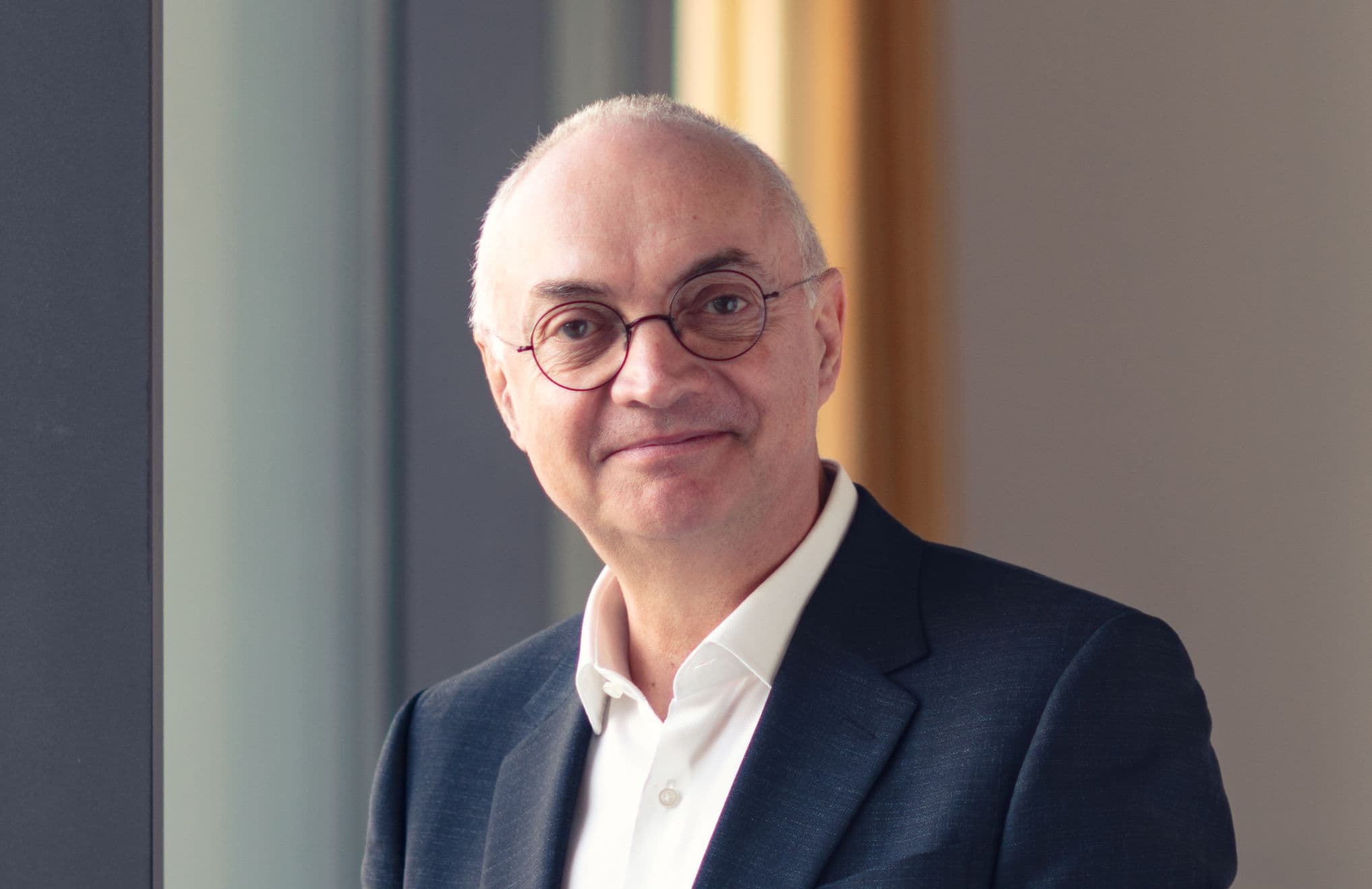
Luc Van den hove is President and CEO of imec since July 1, 2009. Before he was executive vice president and chief operating officer. He joined imec in 1984, starting his research career in the field of silicide and interconnect technologies. In 1988, he became manager of imec’s micro-patterning group (lithography, dry etching); in 1996, department director of unit process step R&D; and in 1998, vice president of the silicon process and device technology division. In January 2007, he was appointed as imec's EVP & COO. Luc Van den hove received his PhD in electrical engineering from the KU Leuven, Belgium.
In 2023, he was honored with the Robert N. Noyce medal for his leadership in creating a worldwide research ecosystem in nanoelectronics technology with applications ranging from high-performance computing to health.
In 2025, he was awarded the honorary distinction from the Flemish Community in recognition of his impressive role in strengthening Flanders as a leading innovative region.
He has authored or co-authored more than 200 publications and conference contributions.
Starting in April 2026, he will take on a new role as Chair of imec’s Board of Directors.
Published on:
31 March 2026