

An expert panel discusses how to move towards an ecosystem mindset in the biomanufacturing sector and how data graveyards should be turned into contextual data to enable the integrated, closed-loop future of next-generation biomanufacturing.
The recent imec Bioconvergence Forum: ‘Specialty Silicon Driving Deeptech Life Sciences & Medtech’, brought together global leaders to discuss a.o. the transformation of the bioprocessing industry. As the sector moves toward increasingly complex molecules and personalized therapies, the industry is hitting a wall. How to automate the processes and ensure unprecedented precision and personalization while accelerating production timelines?
The panelists agreed – the future of biomanufacturing depends not just on better sensors, but on a fundamental shift toward a more open and collaborative mindset. Actors in the biomanufacturing ecosystem should collaborate toward a common goal, first identifying which decisions in the process can be automated and then working backwards to define the necessary data and sensor technologies.
Hemanth Kaligotla, director of external innovation at Lonza, perfectly summarized it: "The challenge we face is not just about the sensing technology itself, but about effectively connecting that sensing to meaningful decision-making by working backward from the specific decisions you want to automate. We must recognize that more data alone is not the answer; instead, integrated data for decision-making is key. Currently, integration across systems remains the biggest bottleneck, particularly in larger organizations where new tools must be standardized across complex legacy networks. Ultimately, no single player can actually solve this in isolation, and ecosystem collaboration is the only way to move the industry forward.”
Read more in detail how experts from R&D organizations (imec and CSEM), technology providers (ThermoFisher and Cytiva) and contract development and manufacturing organizations or CDMOs (Lonza) view their industry’s challenges, as discussed during imec’s Bioconvergence Forum:
From data graveyards to decision-driven manufacturing
For years, the industry has focused on generating vast amounts of data, much of which remains inaccessible or unused in what experts describe as data graveyards. To move forward, developers must work backward from the specific operational decisions they wish to automate.
Sean Muthian, chief science officer for Hardware Solutions at Cytiva, argued that data is only valuable if it drives a specific action: "We need to stop asking what we can measure and start asking what decisions we want to automate. The goal is to move toward decision-compressed manufacturing, where sensing and native computing are integrated directly into the equipment to enable true closed-loop control".
This approach aims to reduce human intervention and accelerate production timelines through real-time analytics. Sean Muthian further explained: "To reach a future with minimal human intervention, we should focus on automating specific unit operations. By proving this closed-loop approach in a single operation over the next few years, we create a tangible blueprint that can be scaled across the entire manufacturing process."
Breaking down data silos through contextualization
The technical challenge of biomanufacturing is compounded by the lack of context surrounding raw data, which makes it consumption-unready for AI and predictive analytics. Without time-series alignment and curated relationships, siloed data remains useless for extracting meaningful insights.
Moira Lynch, director Innovation and Technology Integration at Thermo Fischer Scientific pointed out that technology providers must prioritize making data searchable and actionable: "In the past, data was often stored away and only retrieved when a deviation occurred. Today, our focus is on building contextualization directly into the data generation process so that the resulting datasets are immediately usable for deep insights".
Furthermore, there is a push to democratize these advanced capabilities so that smaller biotech firms can access the same level of sophistication as large pharma. Moira Lynch noted: "We must strive to remove the technical burden from our customers. As technology suppliers, our role is to make these complex capabilities feel like second nature, ensuring that even smaller organizations can benefit from highly connected workflows."
Addressing the complexity of future therapeutics
The shift from well-characterized monoclonal antibodies to fragile, low-titer molecules like multi-specifics and viral vectors is driving a need for more stable growth conditions and continuous processing, such as perfusion systems.
Carrie Mason, director Integrated Biologics R&D at Lonza, explained that current tools must evolve to support these advancing therapeutics: "The industry is transitioning toward much more complex molecules that require extremely stable growth conditions and constant nutrient supply. Our biggest challenge is ensuring reproducibility and scalability across global facilities, which requires a more robust and generic approach to PAT."
For specialized applications like CAR-T cell therapies, where every day of production time directly affects patient outcomes, real-time parametric release is becoming a necessity. Carrie Mason highlighted the ultimate goal of this technological evolution: "We are driving toward a future of real-time release. By moving away from time-consuming offline testing and performing quality assurance in parallel with production, we can significantly increase throughput and deliver life-saving treatments to patients much faster."
A call for cultural change and incremental progress
Transitioning to next-generation biomanufacturing requires more than just hardware; it requires a cultural shift away from the "invent-here" syndrome and a willingness to collaborate across the entire ecosystem.
Carrie Mason urged the industry to recapture the collaborative spirit seen during the global pandemic: "Historically, our industry has been conservative and siloed, but the pandemic proved what we can achieve when we work toward a common goal. We need that same level of commitment to collaboration now to create transformational changes that benefit the entire sector."
The path forward will likely be paved with small, deliberate proof points that build the confidence needed for radical change. As Carrie Mason concluded: "We don't need to overhaul everything at once. By making small, incremental changes today, we can gain the acceptance and the data we need to be ready when truly disruptive technologies arrive."
Pawan Jolly, head of Strategic Partnerships Health, East Coast, at imec, who moderated the imec Bioconvergence Forum offered a final synthesis: "What gives me confidence about the future of biomanufacturing is not any single technology – it is the willingness of this ecosystem to think differently. When R&D organizations, technology providers, and CDMOs sit in the same room and ask the same questions, that convergence itself becomes the innovation."
New PAT technology integration through imec/CSEM collaboration
With ecosystem collaborations as one of the key points mentioned during the forum, imec and CSEM discussed their project as a fine example of innovations coming out of such collaborations. It demonstrates how combining specialized expertise can solve long-standing bottlenecks in process analytical technology (PAT).
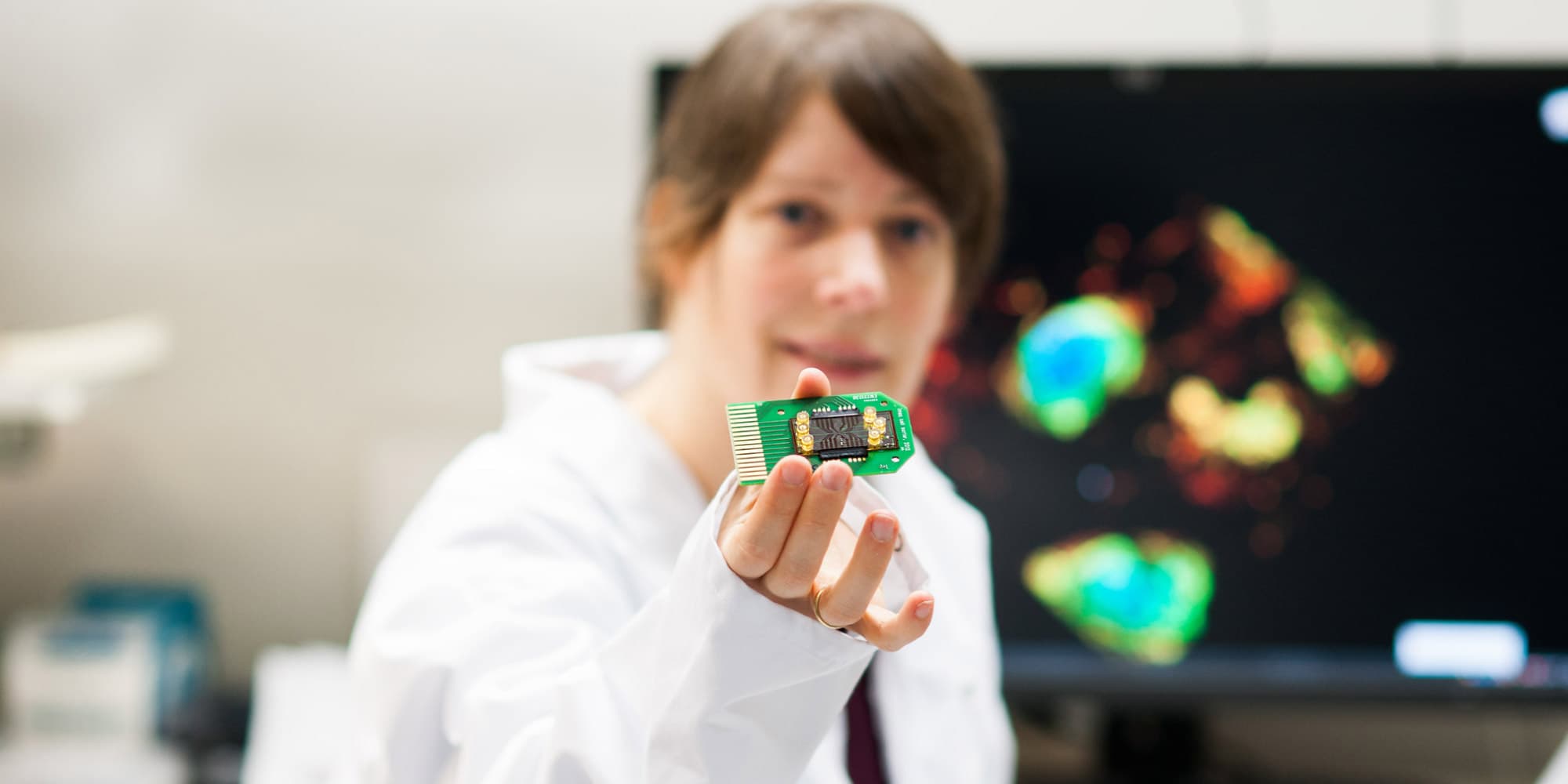
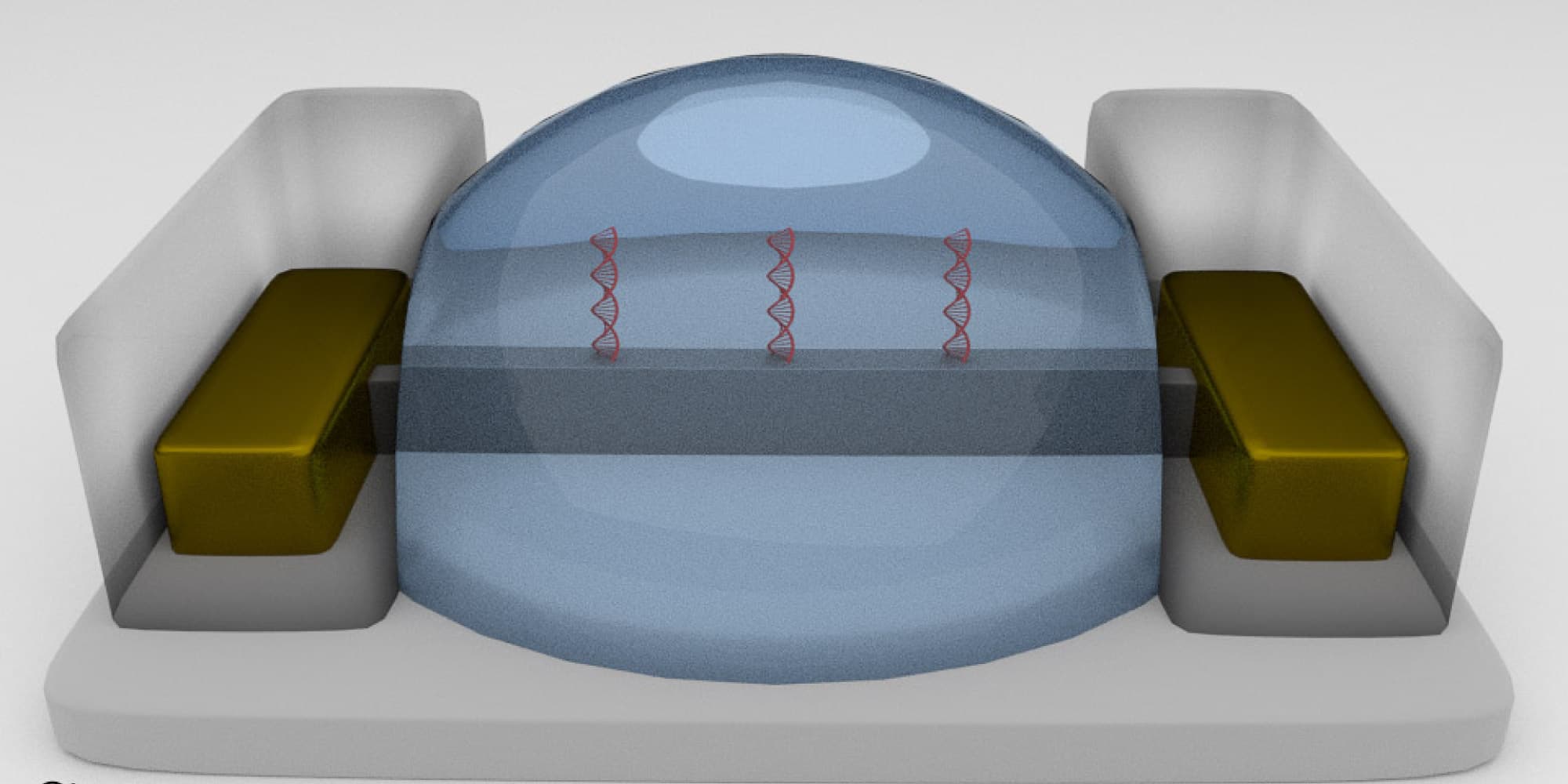
The imec/CSEM collaboration focuses on integrating imec’s miniaturized, semiconductor-based PAT sensors into CSEM’s microfluidics platform. The ‘smartpatlid’ will be able to do real-time quality control and closed-loop media exchange directly within well plates.
Tom Valentin, group leader Automated Sample Handling at CSEM, emphasized that this synergy is the only way to meet evolving market demands: "The collaboration between CSEM and imec serves as a primary example of why an ecosystem mindset is essential. While a single organization might move faster in isolation, we can achieve far greater impact and reach much further by working together and playing to our respective strengths".
This integration allows for the monitoring of critical parameters like dissolved oxygen and cell density in small-scale environments, which is essential for applications ranging from suspension cells to complex organoids. Tom Valentin noted that the versatility of silicon-based technology is a game-changer: "A significant advantage of using semiconductor-based PAT chips is their adaptability; they offer a versatile menu of monitoring capabilities – such as biomass and cell density – that can be easily tailored to specific application needs."
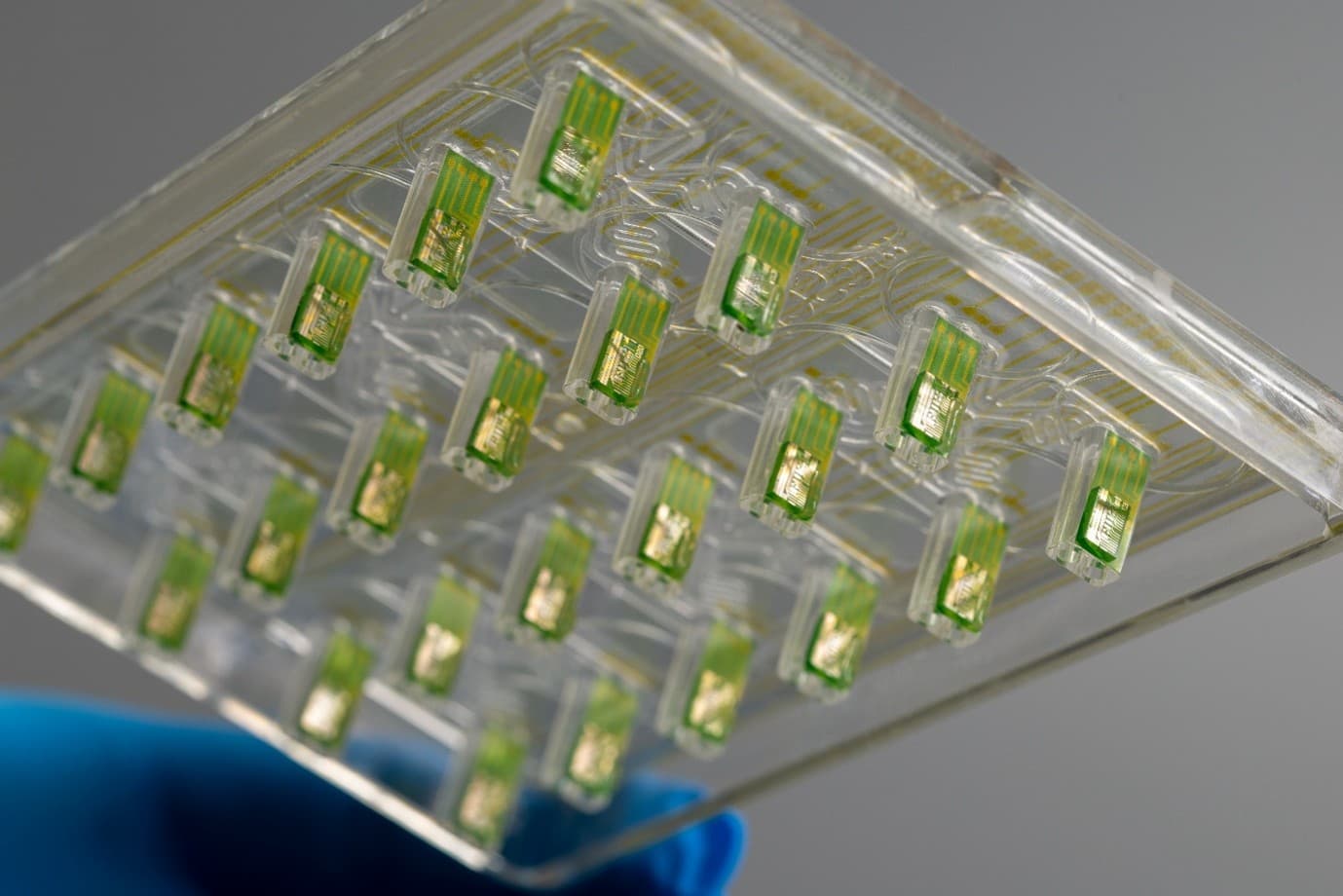
Concept picture of imec’s PAT sensor chips integrated in CSEM’s fluidic lids.
Shape the future with imec
Imec has established deep expertise in developing very advanced and miniaturized semiconductor-based PAT sensors, specifically referred to as PATcube chips. These silicon-based sensors are highly adaptable, offering a ‘menu’ of monitoring capabilities that include dissolved oxygen, biomass, and cell density (DCD).
A significant strength of imec’s technology is its miniaturization, which allows these sensors to be integrated into diverse form factors, such as standard well plates. This versatility makes the technology applicable not only to traditional bioprocessing but also to organoids, microphysiological systems (MPS), and any complex cell culture requiring continuous, real-time monitoring.
The development of the smartpatlid together with CSEM is just the beginning of a new era in bioprocessing technologies. Imec invites ecosystem companies and experts to collaborate in driving this transformation forward.
If you are interested in exploring the potential of the smart lid technology or wish to discuss new, disruptive ideas for biomanufacturing and life science technologies, please contact imec to start the conversation.
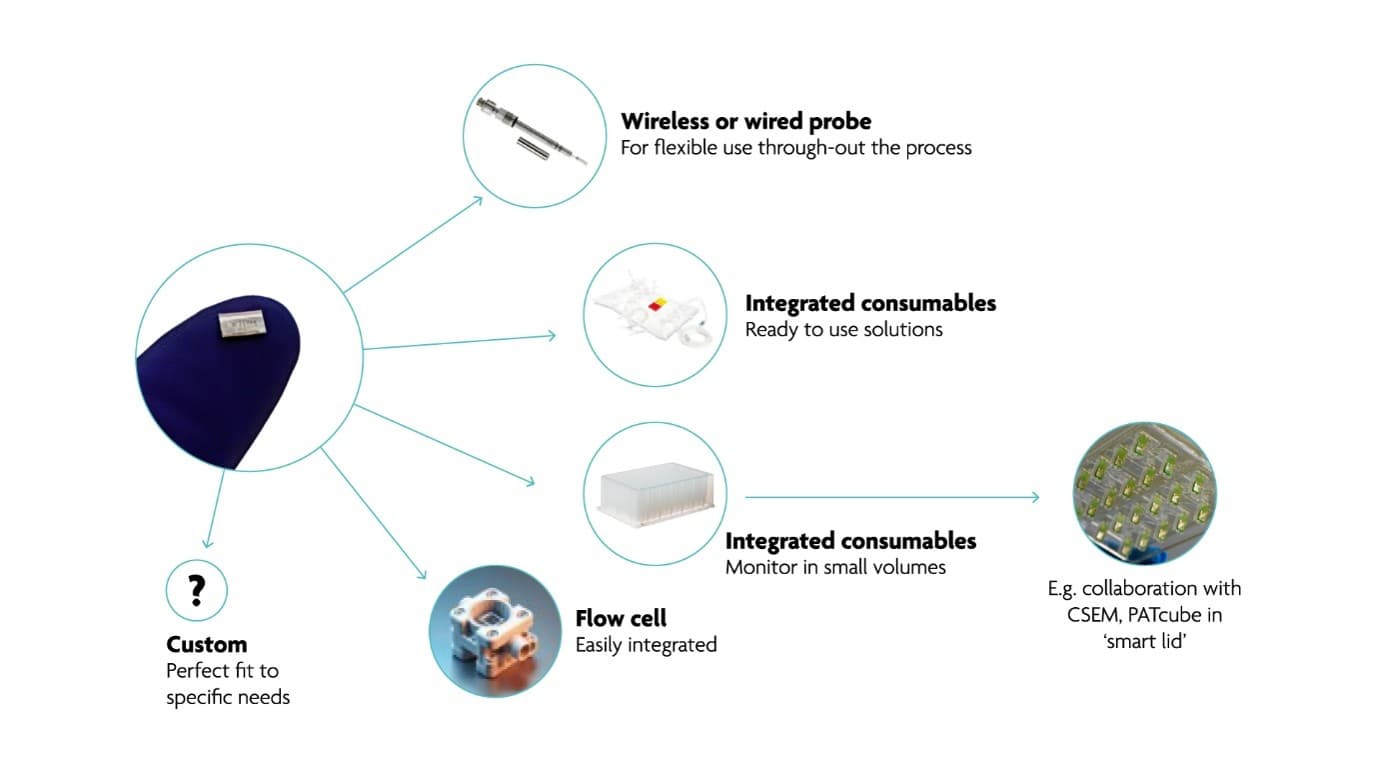
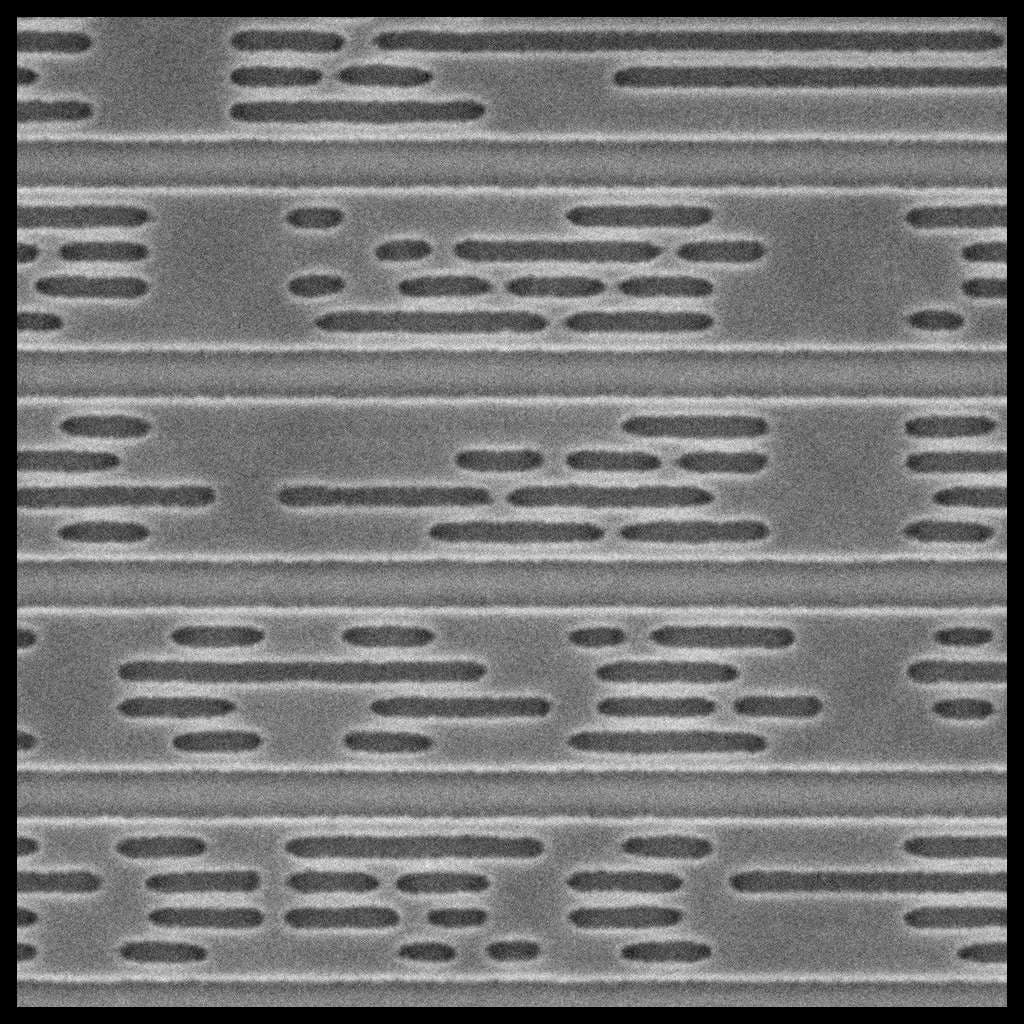
Imec’s PATcube chips are ultra‑miniaturized, silicon‑based PAT sensors that support multiple monitoring functions – like dissolved oxygen, biomass, and cell density – and can be integrated into diverse form factors.
Biographies

Hemanth Kaligotla
Director of external innovation, Lonza
Hemanth Kaligotla is director of external innovation at Lonza Biopharma, where he leads the identification, strategic planning, and implementation of technology initiatives aligned with the company’s overall business strategy. He has over 18 years of experience in biomanufacturing and commercial business development within the biopharma industry. Previously, he held multiple leadership roles at Sartorius, including regional head of the Chromatography Applications organization, where he oversaw commercial technology implementation, contributed to strategic marketing, and led launch strategies for regional product releases. He has also successfully commercialized biologics and led technology transfers at Shire Biopharma.
Tom Valentin
Group leader - Automated Sample Handling, CSEM
Tom Valentin leads the Automated Sample Handling group within the Tools for Life Sciences team at CSEM in Switzerland. His group integrates PAT and other sensing technologies into novel consumables (pipette tips, transwells, well plates, lids) and lab automation solutions, including microfluidic and robotic platforms. His work spans applications in bioprocessing, cell and gene therapy, NAMs (organoids and organs-on-chips), regenerative medicine, and diagnostics.

Carrie Mason
Director, Integrated Biologics R&D Group, Lonza
Carrie Mason is director in the Lonza Integrated Biologics R&D Group and heads a multidisciplinary center of excellence focused on process analytical technologies and automation. She has nearly 30 years of industrial experience in purification development, analytical methodologies, and clinical and commercial biomanufacturing. She has supported process technology transfer from lab scale to large-scale manufacturing and led the rollout of Raman modeling with automation offerings for CDMO clients.

Moira Lynch
Director, Innovation and Technology Integration, Thermo Fischer Scientific
Moira Lynch is a director of Innovation and Strategic Projects for Bioproduction at Thermo Fisher Scientific. In this role, Moira is responsible for accelerating the adoption of technologies aimed at supporting biomanufacturing customers, focusing on process analytical technologies (PAT) and digital integration initiatives through internal and external collaborations. Moira also serves as an L2 representative for multiple BioPhorum Phorums and is an active sponsor for the In-line Monitoring and Real-time Release proof-of-concept workstreams. Previously, Moira led technical teams responsible for purification resin development, expanding the portfolio of Thermo Fisher Scientific’s signature POROSTM chromatography products. Moira has been with Thermo Fisher Scientific for 12 years and has over 25 years of industry experience evaluating, using and developing cutting edge technologies.

Sean Muthian
Chief science officer for Hardware Solutions, Cytiva
Sean is chief science officer for Hardware Solutions at Cytiva. Passionate about scientific advances that enable future medicine development, he focuses on driving specific customer value propositions in Cytiva’s technological response and strengthening long-term partnerships with key customers. He also works to deepen relationships with stakeholders in the startup biotech ecosystem. Before joining Cytiva, he was executive director, Business Analytics and External Innovations at RA Capital Management, a Boston-based life sciences venture and hedge fund, where he led in-depth analysis of large pharma R&D portfolio strategies and commercial assessments of portfolio holdings to support investment decisions. Previously, Sean served as associate vice president, Research & External Science Innovations at Allergan, with responsibilities including Scientific BD leader, Biomarkers and Combination Drug Strategy leader, and Research Project leader. In 2013, he joined the Sigma-Aldrich group as director, Global Strategic Marketing & Collaborations for the Research Business, following many years at Pfizer in various R&D and External Innovation roles. Sean strongly believes that scientific and technological advances can positively impact humanity by addressing critical issues in healthcare, education, inequality, and poverty. He earned a Ph.D. in Pharmacology & Toxicology from the Medical College of Wisconsin (Milwaukee, WI), an Executive MBA from Washington University in St. Louis (St. Louis, MO), and a BS in Mathematics from Beloit College (Beloit, WI).

Pawan Jolly
Strategic partnerships – health (East Coast), imec
Pawan Jolly heads the strategic partnerships for health on the East Coast at imec, where he builds high-impact collaborations across life sciences and medtech. Previously, he held scientific leadership and commercialization roles at the Wyss Institute at Harvard, leading sensor technology development and transfer, and has since advised organizations on strategy, M&A, and technology development. He is also the co-founder of Statadx, a diagnostics startup focused on neurological diseases. He holds a Ph.D. in Electrical and Electronic Engineering from the University of Bath and a Master’s in Biomedical Engineering from FH Aachen University of Applied Sciences.