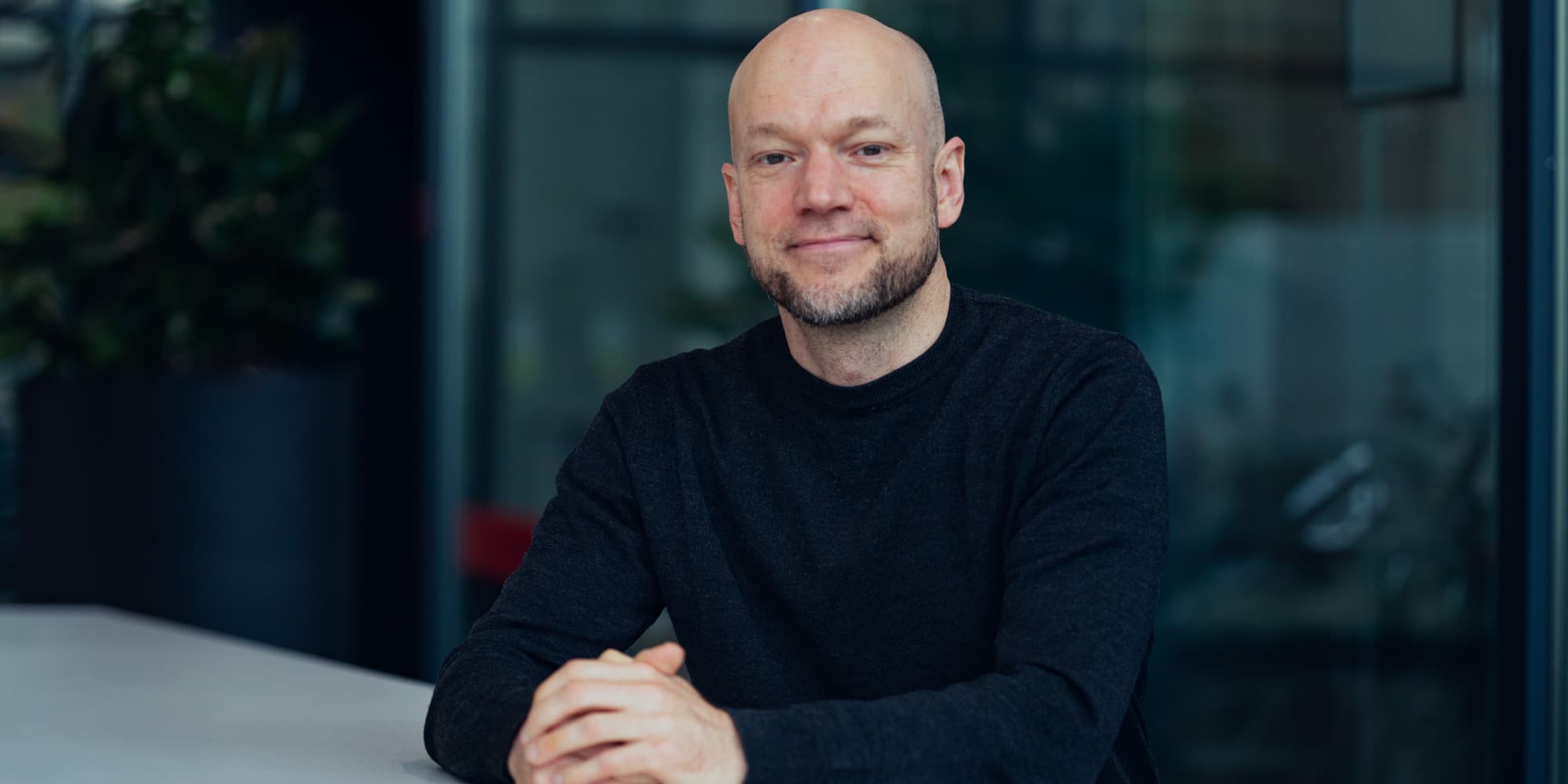

Karl Tuyls has spent much of his career asking how intelligent agents learn, cooperate, and make decisions. Now, at imec, that question meets another one: what kind of compute technology will future AI need?
After senior research and leadership roles at DeepMind and Meta, Karl joined imec in 2025 as CTO AI and imec fellow. His mission is to help shape imec’s long-term AI R&D strategy across technology domains, with a focus on the AI compute roadmap and on strengthening imec’s position in the global AI ecosystem.
Returning to where the passion began
Karl’s path has taken him from Belgium to the Netherlands, the United Kingdom, France, and back to Belgium. After nearly two decades abroad, joining imec marks a return to his roots in Leuven, where his passion for science and technology first began.
Before joining imec, Karl held senior AI leadership roles at Google DeepMind and Meta, and academic positions at institutions including the University of Liverpool, Maastricht University, Eindhoven University of Technology, Vrije Universiteit Brussel, and Hasselt University. He currently holds honorary and guest professor positions at the University of Liverpool and KU Leuven.
He obtained his PhD at Vrije Universiteit Brussel in 2004, followed by postdoctoral work at Hasselt University before moving to Maastricht University in 2005.
Across these roles, Karl’s research has focused on multi-agent AI, where intelligent systems do not act alone, but learn and make decisions in environments shared with other agents. This perspective reflects the complexity of the real world, where people, machines, institutions, robots, markets, teams, and systems constantly coordinate, compete, and adapt.
Understanding intelligence in a multi-agent world
Karl’s work sits at the intersection of machine learning, game theory, reinforcement learning, robotics, and intelligent systems. His research has explored how agents can learn in cooperative and competitive environments, and how game-theoretic methods can support the training and evaluation of AI systems.
One of the most visible outcomes of his work at DeepMind was DeepNash, an AI agent that reached human expert-level performance in Stratego, a complex board game with imperfect information. The work was published in Science, introducing DeepNash as an autonomous agent able to play Stratego at a human expert level.
Karl also contributed to TacticAI, an AI assistant for football tactics developed and evaluated in close collaboration with Liverpool FC. Published in Nature Communications, TacticAI focused on analyzing and recommending corner-kick tactics, showing how AI can support decision-making in dynamic, real-world team settings.
Bringing AI and compute closer together
At imec, Karl’s mission connects AI research with imec’s deep expertise in compute technologies, semiconductor scaling, system architecture, and hardware innovation.
As AI models and agentic systems become more capable, their computational demands continue to grow. At the same time, future progress cannot rely only on more data and larger systems. It will also require new forms of efficiency, new hardware-software co-design approaches, and closer alignment between AI algorithms and the compute platforms that run them.
Karl sees this as one of the major opportunities for imec. In his words, “AI and chip design increasingly go hand in hand, from architectural co-design to efficient deployment at scale. That makes imec a natural place to think about the next wave of AI innovation. The challenge is not only to build better AI models, but to understand how intelligence, algorithms, data, compute, memory, interconnect, and energy efficiency come together in real systems.”
Looking beyond incremental AI
Karl has also emphasized a return to more foundational AI research. “While recent progress in large language models has been remarkable, I want to look beyond incremental improvements and focus on themes such as agentic systems, reinforcement learning, and general intelligent behavior with long-term positive impact on society.”
Explore imec.AI-labs, the Paris-based center of excellence exploring novel AI model architectures
This long-term perspective fits imec’s research culture. Breakthroughs in AI compute will require deep technical work, but also strategic choices about where AI is heading and what kinds of hardware and systems will be needed to support it.
As CTO AI, Karl’s role is to help connect those questions across imec. That means shaping strategy, building links between teams, attracting talent, and positioning imec in the global AI ecosystem.
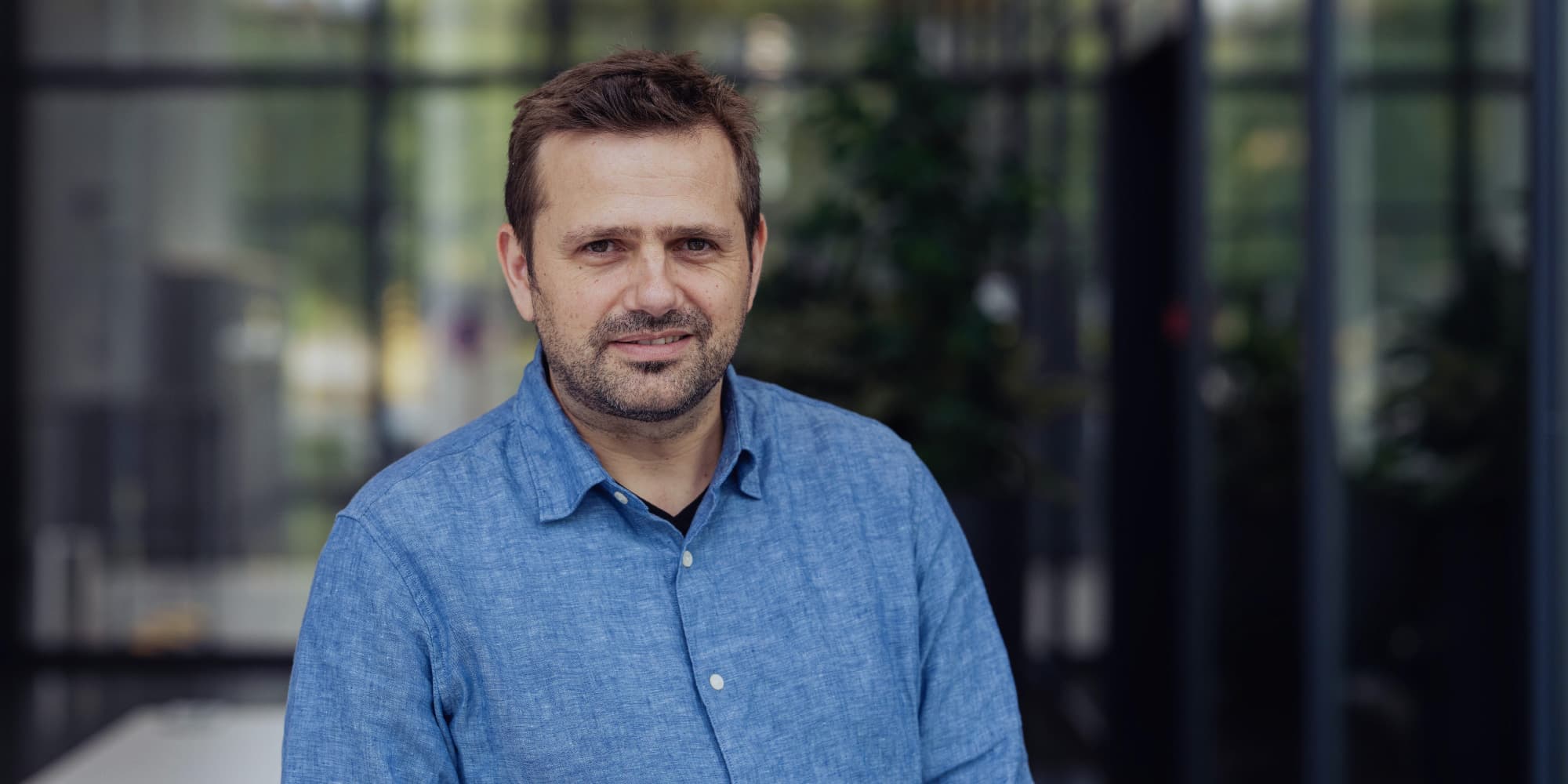
Karl Tuyls is imec fellow and CTO AI. He joined imec in 2025 to drive the long-term AI R&D strategy across technology domains, with a focus on imec’s AI compute roadmap and its position in the global AI ecosystem.
Before joining imec, Karl held senior AI research and leadership roles at Google DeepMind and Meta, and academic positions at the University of Liverpool, Maastricht University, Eindhoven University of Technology, Vrije Universiteit Brussel, and Hasselt University. He obtained his PhD at Vrije Universiteit Brussel in 2004.
His research focuses on multi-agent AI, game theory, reinforcement learning, agentic systems, robotics, and intelligent behavior in cooperative and competitive environments.
Expertise
- Multi-agent AI
- Game theory and reinforcement learning
- Agentic systems and intelligent behavior
- AI compute strategy and hardware-software co-design
Career highlights
- Joined imec in 2025 as imec fellow and CTO AI
- Led game theory and multi-agent AI research teams at Google DeepMind
- Co-developed DeepNash and TacticAI
- Held professor and research positions across leading European universities, including Liverpool, Maastricht, Eindhoven, VUB, Hasselt University, and KU Leuven
- Recognized as a Fellow of the British Computer Society
Published on:
7 August 2026