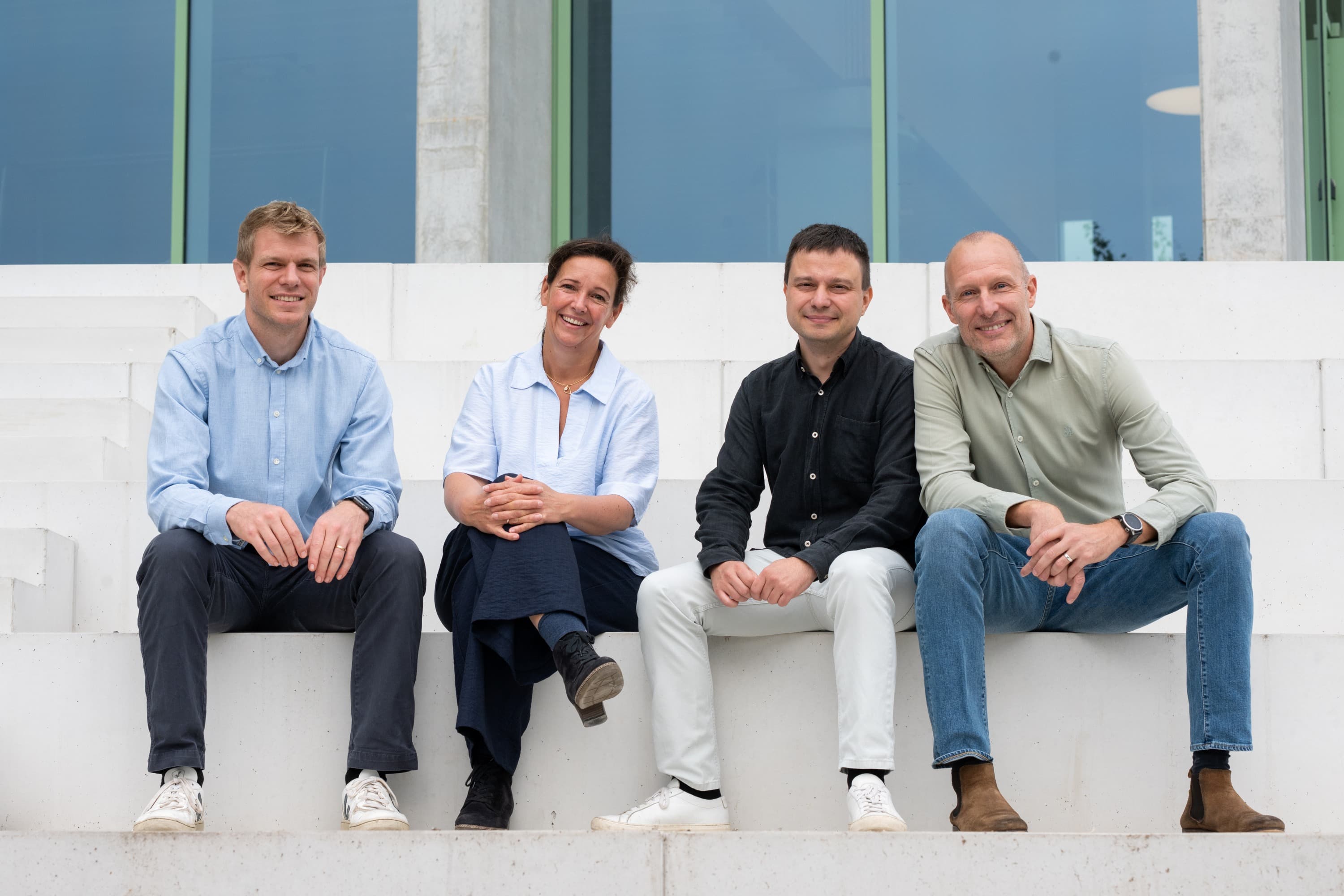

The recent imec Bioconvergence Forum, titled ‘Specialty Silicon Driving Deeptech Life Sciences & Medtech’, brought together global leaders to discuss a.o. the major trends in the neurotech and brain-computer interfaces (BCI) industry. On the stage were:
- Kazutaka Takahashin, CEO at Ruten Inc.
- Paul Le Floch, CEO at Axoft
- Oybek Kholiqov, Founder & CEO at Neuralenz
- Simon Little, Associate Professor of Neurology at UCSF Medical Center
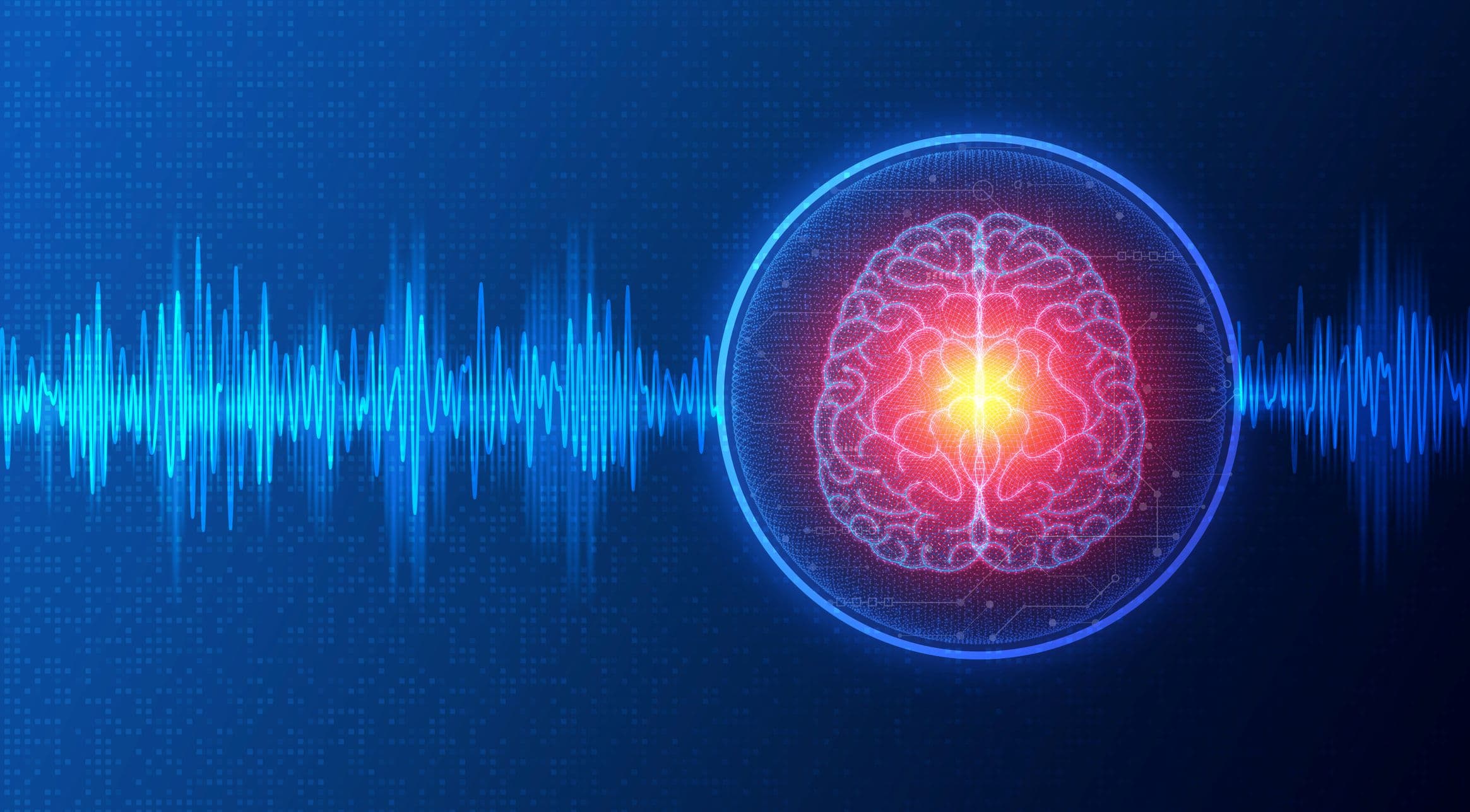
Terming the forum ‘bioconvergence’ was an obvious choice since the industry is currently witnessing a pivotal moment where technology and biology meet, and where isolated devices shift into integrated platforms that combine biology, microelectronics, material science and data science.
Three major factors in this evolution are:
- the rise of AI (with computing capacity able to handle large amounts of data)
- the extreme miniaturization of technology (which enables interfacing with the nervous system)
- the increased understanding of both the central and peripheral nervous systems.
Interfacing with these nervous systems promises to address the most complex challenges of human health. Michiel Twisk, Sr Business Development at imec and moderator of the neurotech panel discussion adds: “Neuromodulation is emerging as a critical alternative for conditions previously treated only through chemical interventions – offering a strategic path forward as the pharmaceutical industry faces the fundamental problem of escalating costs in drug development.”
Pawan Jolly, heading imec strategic partnerships within health in East Coast, who moderated the forum as a whole, reflects on the throughline across both the neurotech panel and the wider medtech agenda: "Running the full Bioconvergence Forum, what struck me was how the same tension showed up in every room – not just neurotech. Whether the conversation was about brain stimulation or the broader medtech agenda, everyone was wrestling with the same question: how do you get powerful but invasive technology into a form patients and clinicians will actually adopt. That's the thread that ties this whole forum together."
A eureka moment in Parkinson’s treatment
The immense evolution of neurotech is vividly demonstrated by Simon Little, Associate Professor of Neurology at UCSF Medical Center, a leading institution in clinical neuroscience. While there is an undeniable "buzz around BCI" today, Simon Little recalls that the field was viewed very differently when he started his PhD in Oxford.
He remembers being fascinated by brainwaves in 2008, but when he approached his supervisor to join the lab, he was met with a warning: "Sure, you can join, but just be aware... You'll never get a high-impact publication, neurophysiology is never going to be trendy". Despite this skepticism, he joined the lab and eventually became the original first author of the paper for the first adaptive brain stimulation system for Parkinson’s disease.
Simon Little recalls those early days of research as a "fiddly technical nightmare" where patients in the operating theater had "wires coming out of their head" and researchers were forced to use "boxes and boxes and boxes of amplifiers" that they had to build by hand. He describes a profound eureka moment in the operating theater: "I was looking down, it looked like everything was working, and I looked up at the patient and suddenly something had radically changed. He had gone from being slow and stiff and frozen to being fast and his stiffness had gone away... and he was smiling".
This breakthrough was based on tracking local field potentials (LFP). Simon Little: “You could compare these measurements with listening to "whispers" of a crowd of neurons rather than of individual cells.” (Note: This is in contrast to Neuropixels (i.e. probes developed by HHMI, the Wellcome Trust, the Allen Institute, and imec), which record the firing of individual neurons). As Little explains, decoding these tiny signals (a millionth of a volt) while simultaneously stimulating the brain is like "trying to decode someone whispering while firing a cannon right next to them".
While this is now an approved therapy, a major challenge remains: the treatment is highly intrusive, requiring skull surgery. Simon Little notes that despite being a "very, very powerful therapy," it remains underutilized because many patients are reluctant to undergo such an invasive procedure.
To address this, his lab is now focusing on the future of Parkinson’s care by utilizing AI and additional sensors on the brain surface to capture richer signals. The ultimate goal is to solve this "technology problem" by creating lower-burden, yet highly sophisticated interfaces that make it easier to deliver precision brain therapies, finally allowing these life-changing therapies to reach much larger numbers of patients.
Multimodal and bidirectional solutions for stroke-related impairments
Kazutaka Takahashi of Ruten Inc., a company developing disease-targeted brain-machine interfaces (BMI), points out that stroke patients face a range of complex challenges, including speech, swallowing, and bladder dysfunction, for which few effective medical solutions currently exist.
To address one of these unmet needs, Ruten Inc. initially focuses on dysphagia – difficulty swallowing – a condition that affects approximately 16% of the world's population at some point in their lives, and 10 to 20% of stroke patients suffering from it long-term.
Existing treatments, such as swallowing rehabilitation, invasive surgery, and open-loop electrical stimulation, often have limited effectiveness. As a result, fear and anxiety associated with swallowing can significantly restrict patients' daily lives, leading to a substantial decline in quality of life.
Kazutaka Takahashi: “To solve these kinds of issues, we must evolve toward a bidirectional and multimodal neural therapy that connects the central and peripheral nervous systems. Kazutaka Takahashi emphasizes that "swallowing is a behavior that we actually take for granted, but it's pretty complex... we need to actually include the additional behavior components (like breathing) in the closed-loop system".
Trends in soft and non-invasive technology
The panel also highlighted trends away from conventional BCI. Oybek Kholiqov, Founder & CEO at Neuralenz – a startup developing non-invasive optical technology for monitoring brain health – discussed novel approaches with advances in diffuse optics.
Kholiqov’s optical innovation allows for quantitative measures of blood flow, oxygenation, and intracranial pressure non-invasively. Scalability here is key: moving from a research-grade device to more deployable, cost-optimized form factors.
Minimizing invasiveness has the ultimate goal of minimizing risk to the patient. Optimizing for risk however can also be done through optimizing material properties that interface with our brain. Paul Le Floch, CEO at Axoft, which develops soft, bio-inspired materials for implantable devices, argues that the physical interface is a major hurdle. "My PhD was, 'How do we make materials so that the brain implants don't kill neurons?'" Le Floch explains. Axoft’s soft implants are designed to mimic tissue properties, allowing for stable, high-resolution data collection without the chronic damage caused by rigid traditional electrodes.
The hurdle of reimbursement
Even the most advanced technology faces the "problem of reimbursement". Oybek Kholiqov notes that selling large capital expense equipment to hospitals is increasingly more challenging, and most companies in the diagnostics space rely on consumables and software for monetization via existing reimbursement pathways.
Le Floch agrees, noting that the fragmented US medical device system requires a carefully crafted go-to-market strategy that aligns with existing device codes and patient groups to be successful within a ten-year timeline.
Imec’s role in scaling innovation
At the heart of these advancements is imec’s (co-)development of platforms like Neuropixels and selective Peripheral Nervous System (sPNS) tools. Imec excels in miniaturization and process technology, but Paru Deshpande, VP R&D Health Technologies at imec, stresses the importance of partnership with application experts.
For instance, Neuropixels is developed by HHMI, the Wellcome Trust, the Allen Institute, and imec. And imec collaborated with the Feinstein Institute to translate anatomical knowledge of the vagus nerve into a specific chip design for targeted stimulation (sPNS). By focusing on the hardware side – moving "from systems to platforms" – imec enables partners to solve specific clinical needs without reinventing the underlying technology.
Future outlook
Looking five to ten years ahead, the panelists envision a more mature ecosystem. Kazutaka Takahashi hopes for a system where companies no longer have to build every module from scratch but can rely on a mature integration system, while Paul Le Floch anticipates interoperability between different neurotech modules and the approval of several new BCI devices.
Simon Little believes we are moving from simple algorithms to sophisticated "co-processors" that can handle personalized therapy at scale. Ultimately, as Michiel Twisk of imec concludes, the goal is to build a foundation where scalable platforms can support the unique applications of every partner in the field.
Biographies
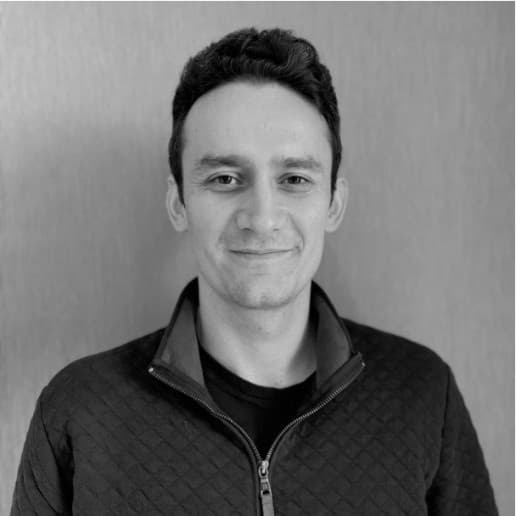
Oybek Kholiqov
Founder & CEO at Neuralenz
Dr. Oybek Kholiqov holds a BS in Optical Sciences from the University of Arizona and a PhD in Biomedical Engineering from UC Davis, where his doctoral work developed interferometric near-infrared spectroscopy (iNIRS). He is a co-inventor of interferometric diffuse optical sensing, generalized as Interferometric Diffuse Optical Spectroscopy (iDOS), a foundation technology of the NIH-NIBIB Designated National Center for Interventional Biophotonic Technologies. His career spans roles as a postdoctoral fellow at Cornell, lead staff scientist at LyteLoop Technologies, and currently CEO of Neuralenz, a neurophotonics startup developing photonic technologies for continuous, noninvasive brain monitoring. He serves as Principal Investigator on federally funded programs advancing interferometric diffuse optics toward clinical deployment.

Paul Le Floch
CEO at Axoft
Paul Le Floch obtained his Ph.D. in Materials Sciences and Mechanical Engineering from Harvard University in 2022 and master’s degrees from Mines Paris and ESPCI Paris. He is a Gold winner of the Materials Research Society Graduate Student Award for his work on soft neural interfaces and was recognized in Forbes 30 Under 30 in the Science category. He is Co-Founder and CEO at Axoft, an early-stage technology start-up developing ultrasoft, high-resolution and chronically stable neural electrodes for brain-computer interfaces.
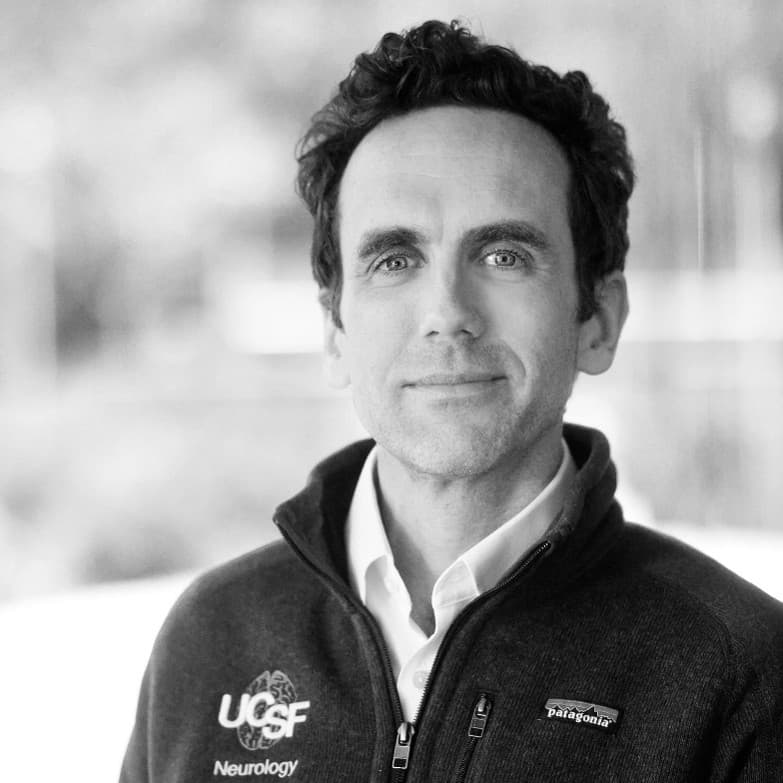
Simon Little
Associate Professor of Neurology at UCSF Medical Center
Simon Little, MD, PhD is Associate Professor of Neurology at UCSF, specializing in movement disorders and neuromodulation. During his Wellcome Trust PhD at Oxford, he developed the first adaptive deep brain stimulation algorithm for Parkinson’s disease, now FDA-approved. His lab develops personalized closed-loop brain stimulation therapies for movement, mood, and sleep disorders.

Kazutaka Takahashin
CEO & CSO at Ruten Inc.
Kazutaka Takahashi completed his Ph.D. at MIT in Control and Estimation, with a minor in Biomedical Engineering, studying cerebrocerebellar control of arm movement. After completing his studies, he joined the University of Chicago as a Postdoctoral Scholar, rising over the next decade to a faculty. He led research on neural encoding and decoding in motor cortex and brain-machine interfaces, later extending this work through senior roles at the University of Missouri and Newcastle University. He joined Precision Neuroscience as a senior neurophysiologist and data scientist to be involved in various aspects of R&D. In 2023, he co-founded Ruten Inc, a US/Japan brain-machine interface company. He is now CEO and CSO, overseeing development of implantable electrode systems, neural signal processing, and machine learning platforms for next-generation neurotechnology.

Paru Deshpande
VP R&D - Health Technologies at imec
Paru Deshpande completed his PhD at Princeton University in the area of polymer self-assembly for lithography. After completing his studies, he joined BioNano Genomics, a US life sciences startup company, as part of the founding scientific team. He led projects in single molecule DNA detection and instrument and assay development. In 2012, he joined imec as Director of the Life Sciences Technologies department. He is now Vice President of R&D for Health Technologies at imec and oversees groups working on sensor and therapeutic platforms for genomics, proteomics, in-vitro models, neurotech, biomanufacturing, and minimally invasive devices.
Michiel Twisk
Sr Business Development at imec
Michiel Twisk is Senior Business Development Manager at imec, based in Eindhoven, The Netherlands. He works within imec’s business development and strategy organization, focusing on building and growing strategic industry partnerships, particularly in Neurotech-related technology domains. He operates at the interface of advanced research, industry collaboration, and commercialization, helping translate cutting-edge R&D into sustainable, long-term partnerships across the semiconductor and high-tech ecosystem.

Pawan Jolly
Strategic Partnerships – Health (East Coast), imec
Pawan Jolly heads the strategic partnerships for health on the East Coast at imec, where he builds high-impact collaborations across life sciences and medtech. Previously, he held scientific leadership and commercialization roles at the Wyss Institute at Harvard, leading sensor technology development and transfer, and has since advised organizations on strategy, M&A, and technology development. He is also the co-founder of Statadx, a diagnostics startup focused on neurological diseases. He holds a Ph.D. in Electrical and Electronic Engineering from the University of Bath and a Master’s in Biomedical Engineering from FH Aachen University of Applied Sciences.