

The recent imec Bioconvergence Forum, titled 'Specialty Silicon Driving Deeptech Life Sciences & Medtech', brought together industry leaders to discuss the integration of microphysiological systems (MPS) into preclinical drug discovery workflows. Senior R&D and technology leaders from Sanofi, Novartis, Novo Nordisk, and MilliporeSigma met to identify the critical steps required to scale MPS technologies across global pharma operations.
Pawan Jolly, head of strategic partnerships, US East Coast Health at imec, who organized and moderated the forum, set the vision for the day: "No single company, technology, or platform will transform drug discovery alone. What we are witnessing is a fundamental shift – not just in how we model human biology, but in how our industry must organize itself around that challenge. MPS demands an ecosystem where technologists, biologists, pharma, and regulators stop working in parallel and start building together – sharing data, sharing validation, and sharing the risk. Because the most powerful thing about MPS is not what any single chip can measure – it is what becomes possible when an entire ecosystem aligns around the same standards, the same data, and the same ambition: a future where no drug fails in the clinic because we failed to build the right model."
Moderated by Paru Deshpande, VP R&D Health Technologies at imec, the panel agreed that advancing MPS requires solving both technical and organizational bottlenecks simultaneously. To achieve broad commercial adoption, the industry must mitigate human operator variability, ensure that generated datasets directly inform drug discovery and development decisions, and establish business models that support shared, ecosystem-wide validation.
Setting the stage: Why MPS? Why now?
Sneha, portfolio manager life sciences at imec, opened the session by framing the problem in stark terms: “Between 85 and 90 percent of drugs fail in the clinic due to safety or efficacy issues that preclinical animal models were unable to predict.” As Sneha explained, this dynamic drives “Eroom's Law”– the observation that drug development is becoming slower and more expensive over time, in stark contrast to the exponential efficiency gains of Moore's Law in the semiconductor industry.
To reverse this trend and realize the potential of AI-driven drug discovery, the industry requires preclinical models with true positive predictive value. Sneha emphasized that scaling AI or high-throughput screening without physiologically representative foundational biology will only scale the production of inaccurate predictions.
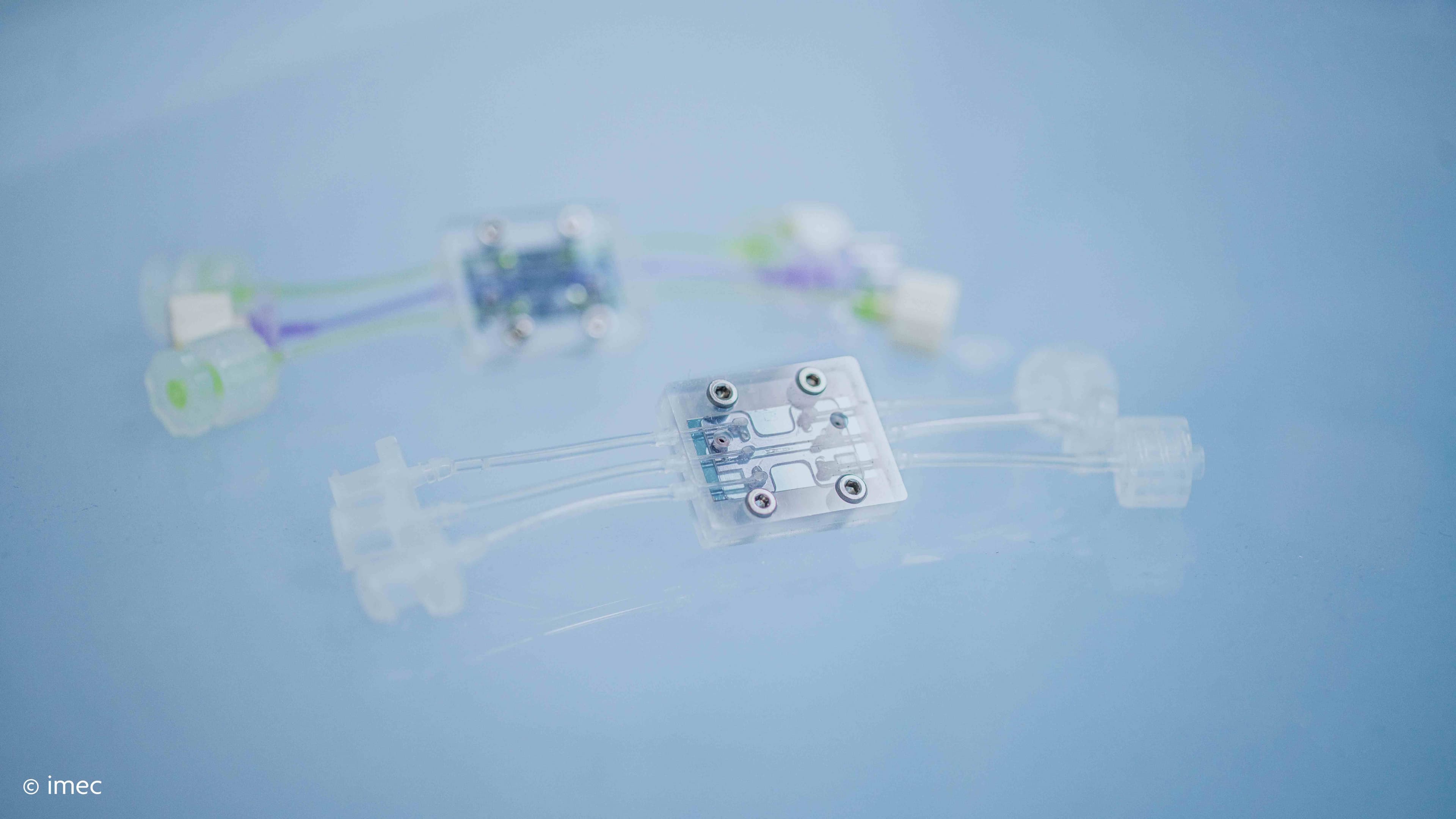
“Imec addresses this gap through a data-first approach, integrating a deep-tech sensor toolbox into MPS to generate continuous, multimodal biological datasets. This approach is demonstrated in imec's blood-brain barrier (BBB)-on-chip platform which pairs a physiologically relevant BBB model with a deep-tech sensor toolbox, including transepithelial electrical resistance (TEER) readouts and integrated biomarker sensing, to generate the kind of rich data needed to predict if and how a drug crosses the barrier in humans. It addresses one of the hardest problems in CNS (central nervous system) drug discovery and is currently offered as a drug-testing service while we build out a comprehensive benchmarking strategy, generating the datasets needed to tightly correlate the platform's readouts with established in vivo, in vitro, and in silico models,” explains Sneha.
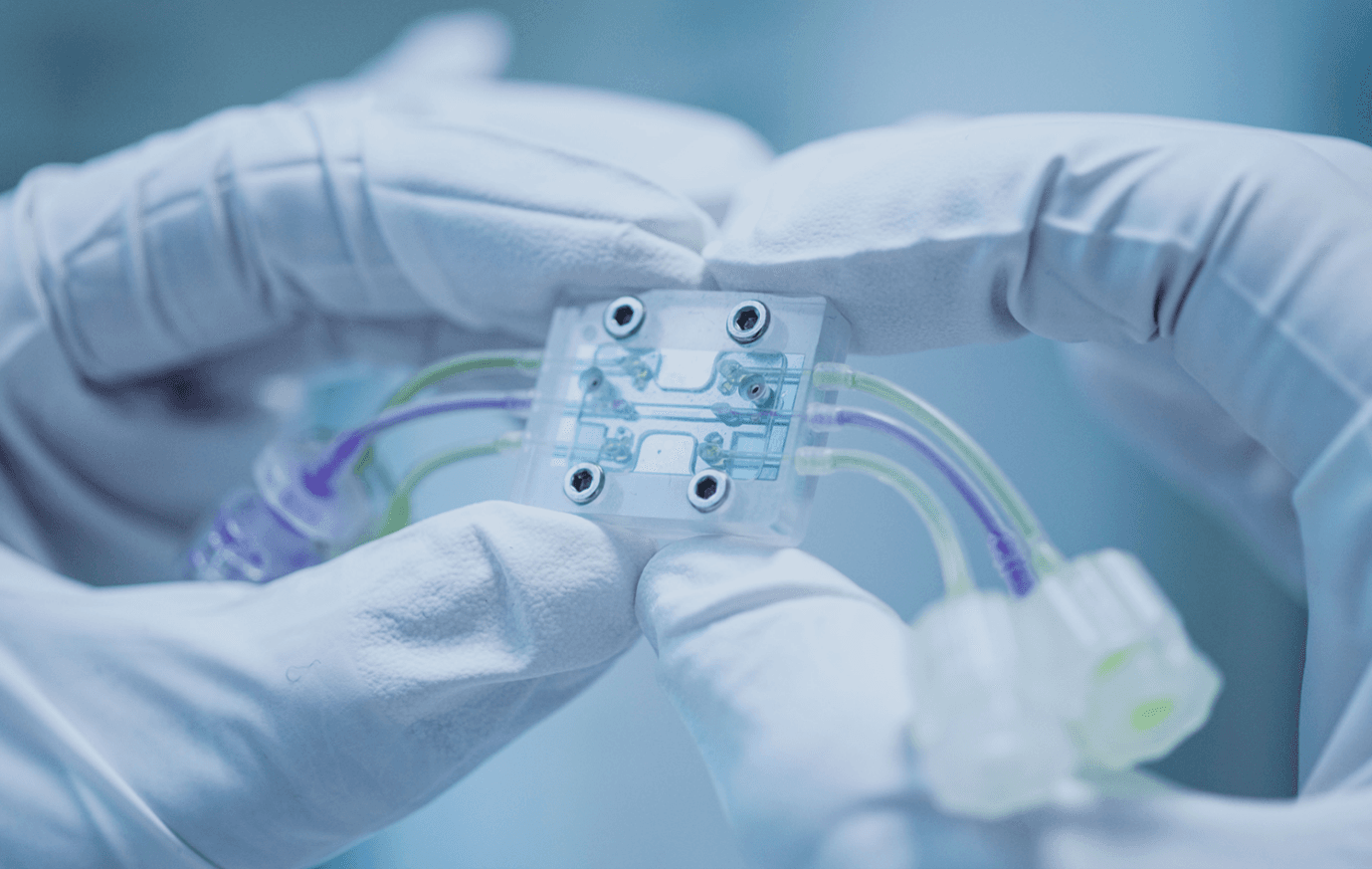
Imec’s microphysiological systems (MPS) platform
Furthermore, Sneha highlighted the necessity of cross-ecosystem partnerships to share the heavy burden of MPS validation and data generation. A gut toxicity model serves as a primary example of this collaborative, multi-partner strategy. The model is being co-developed with MilliporeSigma, providing the biology and acting as productization partner and Merck Darmstadt, providing the pharma end-user perspective.
This deliberate integration of specialized expertise across technology providers, biology developers, and pharmaceutical end-users established the immediate context for the panel's discussion on achieving global industry adoption. Translating that potential into routine industry adoption, however, requires solving a set of concrete technical and organizational challenges, starting with reproducibility.
The reproducibility barrier
The panel agreed that hardware and data strategies are secondary to establishing biological consistency when adapting MPS for routine drug discovery. Integrating novel MPS technologies into global R&D workflows requires robust validation to build internal confidence. As Sarah Tao, then Head of Search & Evaluation, technology Platforms at Sanofi, noted, this is the primary technical requirement for widespread acceptance: reproducing results between technicians, between labs, is key for industry adoption.
Achieving this reproducible baseline requires strict methodological consistency before introducing complex hardware. Will Kools, head of Technology Pioneering Group at MilliporeSigma, emphasized this necessary order of operations: “We must start by getting the biology right. Only then can we make the technology more tangible and translatable.”
Engineering for reproducibility
The primary source of experimental variability in complex biological assays is often the human operator. To reduce this user-dependent noise, the panel emphasized integrating automation and plugging MPS technologies into existing high-throughput workflows. Gianluca Etienne, principal scientist at Novartis, stated, “The user is a key driver of experimental error. Bringing automation into these workflows is critical to reducing variability and increasing reproducibility.”
On the hardware side, the panel converged on a simple principle: sensing should be multi-parametric and non-disruptive. Sarah Tao stressed the importance of having the right sensing capabilities that are non-destructive to the cells, while Gianluca Etienne cautioned that “controlling flow, pressure or movement should never introduce additional variability into already complex biological systems.”
Gianluca Etienne illustrated the economic logic with a concrete example: “A $1000 384-well plate sounds expensive, until you realize it gives you five distinct readouts in one run, replacing five separate experiments.” Generating more data in less time while lowering total spend is how MPS hardware makes its case to end-users and their managers.
Translating data into decisions
While generating richer data is a big challenge, the harder question is whether that data can serve specific decision making.
Will Kools outlined three distinct levels at which MPS and sensor data create value: controlling and monitoring the test system; answering the specific experimental question about a drug's properties; and predicting clinical outcomes. Each level has different requirements and challenges and not distinguishing them leads to data that cannot be acted on.
Rachelle Prantil-Baun, Principal Scientist Novo Nordisk, illustrated the most common failure mode at the experimental level: omics studies launched without a question they are built to answer. As she put it, “If the question isn't clear, omics just becomes data without direction.” This tendency to generate open-ended datasets without a prior decision framework produces data that neither feeds AI models nor informs drug development choices. Instead, she advocated for designing experiments around specific, trackable endpoints – continuous metabolic readouts that directly map to a decision – rather than exhaustive but directionless measurement.
That discipline also shapes which tools belong in the workflow. Rachelle Prantil-Baun pointed to imec's sensor platform as a concrete example: knowing exactly which analytes it measures made it immediately legible as a tool within her existing readout framework.
Democratization and the collaborative ecosystem
For MPS technology to achieve widespread scale, it must transition from customised academic setups to standardized fee-for-service models offered by contract research organizations (CROs). Sanofi argued that the clearest proof of broad acceptance would be MPS becoming a standard menu item at CROs, accessible to small biotech and large pharma alike.
Developing these models at scale, however, requires a collaborative ecosystem where technology providers, biologists, and regulatory agencies share the burden of data generation and validation. Will Kools noted that secure, multi-pharma data sharing has already been proven viable in AI drug discovery through initiatives like Project MELLODDY, which allowed a consortium to train shared models on competitors' data without exposing underlying proprietary datasets.
From proof of concept to routine tool
Looking ahead, the panel hopes that MPS would evolve into a routine tool for early target identification and high-throughput screening, directly reducing the reliance on animal studies and increasing translatability of early discovery..
Gianluca Etienne provided a vision of what this could look like: a tiered discovery framework in which high-throughput MPS platforms are used to screen thousands of conditions, while lower-throughput, higher-complexity MPS systems are used to validate and de-risk the most promising conditions, improving the translational relevance of early drug discovery.
Sarah Tao pushed the ambition further beyond MPS as a secondary screening tool by raising a more provocative possibility: that MPS becomes a genuine discovery instrument, used not just to confirm or filter candidates but to find them in the first place.
Paru Deshpande closed the session by noting the “intimacy with which different stakeholders in the field are actually interacting” in a way he had not seen earlier in his career. The field may not know exactly how that translates into a solution, he said, but “that kind of conversation five years from now will lead to value and better outcomes for patients.”
Shape the future with imec
The blood-brain-barrier and the gut-on-chip models are the first steps in imec's broader MPS roadmap to integrate semiconductor-enabled sensing with robust biology. Imec invites pharma companies, biotech innovators, technology providers, and academic partners to collaborate in driving this transformation forward. If you are interested in exploring how imec's deep-tech toolbox could integrate with your own drug discovery workflows, please contact imec to start the conversation.
Biographies

Sarah Tao
Senior Director Search & Evaluation, CSL Behring
Sarah Tao, PhD, is the Search & Evaluation Immunoglobulin (Ig) Therapeutic Area and Technologies Lead at CSL Behring. In this role, she drives the strategic partnering for external innovations across the development continuum, including advanced formulations, novel delivery systems, and patient-centric solutions that enhance therapeutic impact and accessibility. Prior to CSL, Dr. Tao served as Head of Search & Evaluation for Technology Platforms within Global Business Development & Licensing at Sanofi, where she led partnerships for scalable, next-generation technologies and modalities with cross–therapeutic area applicability. Earlier in her career at CooperVision and Draper Laboratory, Dr. Tao led a variety of technology innovation programs. Dr. Tao earned her PhD in Biomedical Engineering from Boston University.

Rachelle Prantil-Baun
Principal Scientist, Novo Nordisk
Rachelle Prantil-Baun is a Principal Scientist at Novo Nordisk specializing in innovative in vitro cell model systems for metabolic and liver disease therapeutics. With 18 years of drug discovery experience, she has led cross-functional teams developing complex cellular models to study the lung for upper respiratory disease, COPD, and cystic fibrosis, women’s health for identifying pro-biotic therapies, and, more recently, for insulin resistance, type 2 diabetes, and liver disease. Dr. Prantil-Baun's work integrates target discovery platforms with computational biology and quantitative systems pharmacology to predict clinical outcomes.

Gianluca Etienne
Principal Scientist, Novartis Biomedical Research
Gianluca Etienne is a Principal Scientist at Novartis Biomedical Research in Cambridge, Massachusetts, where he drives the evaluation, scaling, and implementation of innovative technologies for preclinical drug discovery. His work focuses on improving translational relevance by integrating complex biological models with high-throughput approaches, including microphysiological systems, phenotypic screening technologies, and microelectrode arrays. He holds a Ph.D. in Materials Science and Engineering from EPFL and a Master’s degree from ETH Zurich and was a Novartis Innovation Postdoctoral Fellow.

Will Kools
Head of Technology Pioneering Group, Millipore Sigma
As part of the Corporate Technology Office, Will Kools leads open innovation activities for Millipore Sigma. After creating two major R&D platforms, he spent 12 years in the commercial organization leading global regional marketing and engineering support for customers. More recently, he has developed new business opportunities in AI-enabled drug discovery and 3D cell culture technologies.
He holds a Ph.D. in Chemical Engineering from the University of Twente and master’s degrees in Chemistry and Physics from KU Leuven.

Pawan Jolly
Strategic Partnerships – US Health, imec
Pawan Jolly heads the strategic partnerships for health on the East Coast at imec, where he builds high-impact collaborations across life sciences and medtech. Previously, he held scientific leadership and commercialization roles at the Wyss Institute at Harvard, leading sensor technology development and transfer, and has since advised organizations on strategy, M&A, and technology development. He is also the co-founder of Statadx, a diagnostics startup focused on neurological diseases. He holds a Ph.D. in Electrical and Electronic Engineering from the University of Bath and a Master’s in Biomedical Engineering from FH Aachen University of Applied Sciences.

Sneha
Portfolio Manager Life Sciences, imec
Sneha is Portfolio Manager Life Sciences at imec, where she is responsible for shaping and prioritizing investments across technology building blocks and aligning internal R&D with external market and ecosystem needs. She joined imec in 2018 and has focused on the development of sensors for aqueous media within the Internet of Things domain, working on characterization and real-life validation across the journey from lab to field. In her current role, she works with pharmaceutical, biotech, and ecosystem partners to translate deep-tech innovations into scalable, fit-for-purpose solutions, with a focus on integrating sensors, data, and hardware into complex biological models including microphysiological systems.

Paru Deshpande
VP R&D, Health Technologies, imec
Paru Deshpande completed his PhD at Princeton University in the area of polymer self-assembly for lithography. After completing his studies, he joined BioNano Genomics, a US life sciences startup company, as part of the founding scientific team. He led projects in single molecule DNA detection and instrument and assay development. In 2012, he joined imec as Director of the Life Sciences Technologies department. He is now Vice President of R&D for Health Technologies at imec and oversees groups working on sensor and therapeutic platforms for genomics, proteomics, in-vitro models, neurotech, biomanufacturing, and minimally invasive devices.