
Protein engineering
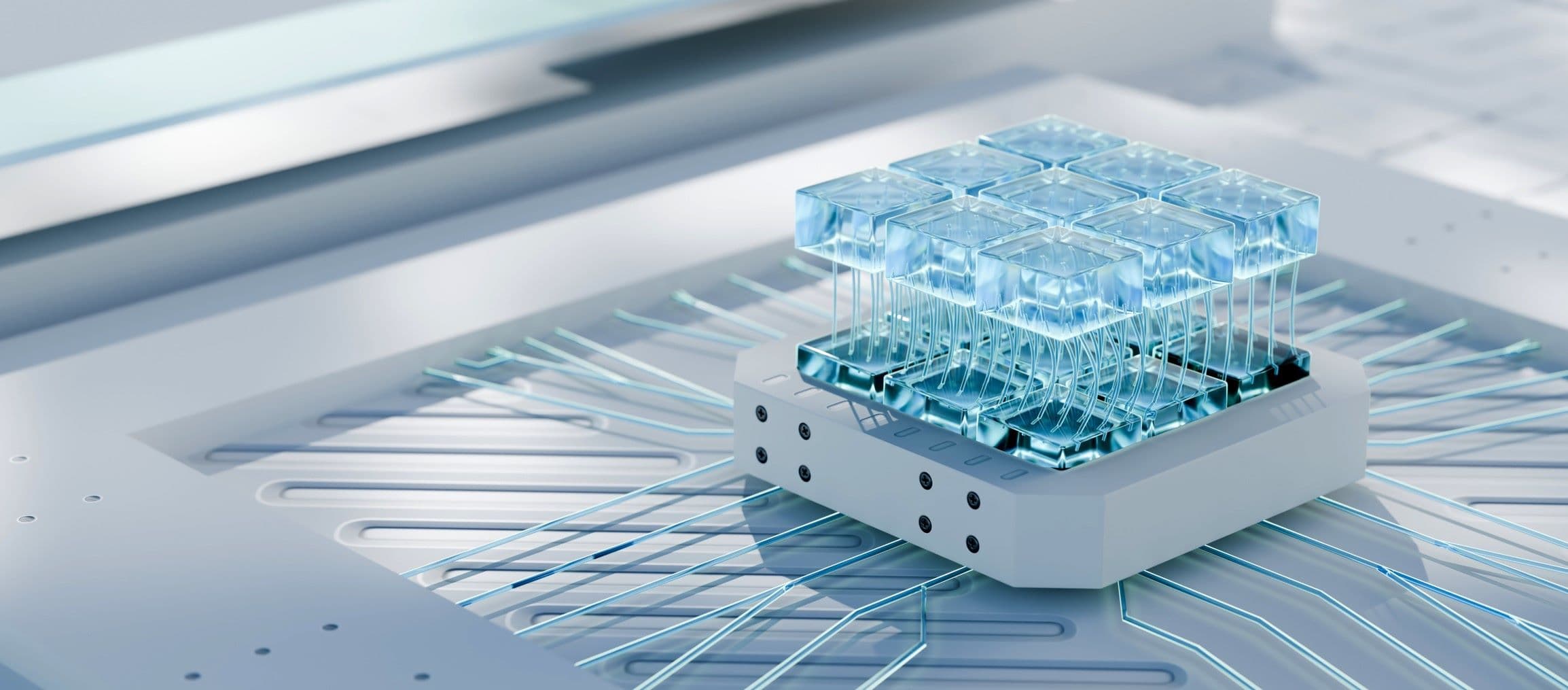
Imec offers building blocks to automate and optimize the promising new approach to protein engineering, based on the AI-driven lab-in-the-loop process flow.
By precisely tailoring protein structure and function, scientists can create molecules that meet the demanding requirements of modern medicine and biotechnology.
Applications of protein engineering are wide-ranging and transformative: from accelerating drug discovery and developing next-generation biopharmaceuticals such as insulin analogs, growth hormones, and antibodies, to advancing immunotherapy, protein-based vaccines, and innovative diagnostic tools like biosensors and biomarker detection.
AI-driven lab-in-the-loop protein engineering approach
‘Lab in the Loop’ is an innovative approach that integrates generative AI with automated laboratory experiments to accelerate protein engineering.
AI models propose novel protein designs with targeted functions, which are then tested in robotic labs. Experimental results are fed back into the AI, creating an iterative loop that continuously refines and optimizes protein candidates.
This combination of artificial intelligence and automated experimentation enables faster, more efficient discovery of proteins with improved stability, specificity, and performance.
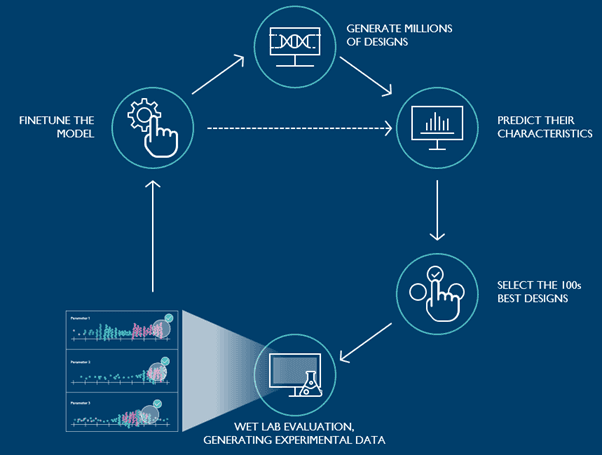
AI-driven lab-in-the-loop protein engineering workflow.
Key challenges in AI-driven protein engineering
This new approach to protein engineering – although with huge potential – also faces major challenges. For example:
- Analytical burden: AI models can generate thousands of candidate sequences, but confirming which are functional requires wet‑lab experiments that remain costly and time‑consuming.
- Throughput vs yield: Miniaturizing experiments (e.g., moving from 96‑well to 384‑well plates) lets labs test more protein variants at lower cost, but produces less protein per variant. This lower yield can limit downstream testing and analysis, requiring a careful balance between quantity and efficiency.
- Expression variability: Protein production can vary between experiments or variants, making it harder to compare results and reliably identify the best candidates.
Imec develops advanced technology building blocks that help innovate (the tools for) the wet-lab-experiments step in the protein engineering workflow. The integrated chip-based solutions aim to make the experiments faster, and more efficient, targeting high-throughput protein discovery.
Imec’s answer to revolutionize the wet-lab experiments step
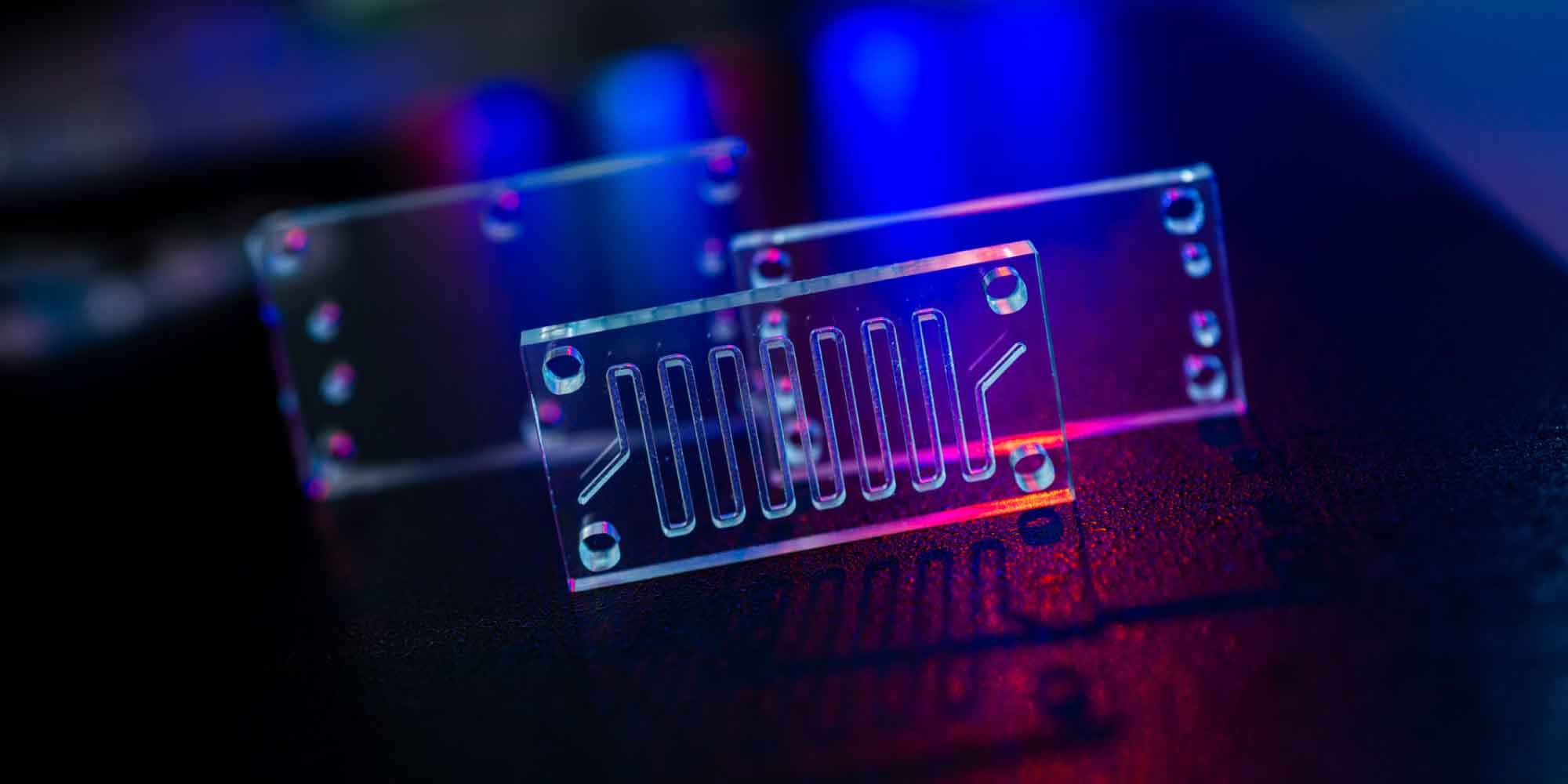
Imec’s building blocks are based on its expertise in post-processing of fluidics, photonics, sensing and actuating on top of steering electronics. Performing experiments on a chip enables automation, straightforward readout, and the use of only small quantities of reagents and proteins.
Imec’s microvalve chip, DNA synthesis chip and PCR chip are all integrated microfluidic platforms that can execute the first protein engineering steps, namely synthesizing and amplifying DNA.
The programmable droplet processor is a unique set-up combining precision microfluidics and driving electronics, allowing to steer millions of droplets with pixel-level accuracy. This is especially useful in the transfection step where host cells are fused with DNA molecules to enable protein production.
Finally, a collaboration with CSEM is ongoing to develop a ‘smart-lid’ well plate with integrated multi-parameter sensor in each well lid to do closed-loop optimization of culture parameters to ensure optimal cell growth in the protein production stage; An on-chip lens-free microscope allows to monitor cells and can for example be used to check for healthy cell growth and efficient protein production.
These building blocks can be used as such in your product or can be further customized and integrated with other functionalities to fit into your product strategy. Custom chip development, with focus on manufacturability, is our target, to uniquely enable our partners to bring the most cutting edge & innovative products to the market.
Contact us to discuss how to collaborate
Click the contact button below to set up a meeting with our team.