STREAMS
Safe Traffic and Road Evaluation, Analysis and Monitoring System
Road works, a safety risk for vulnerable road users
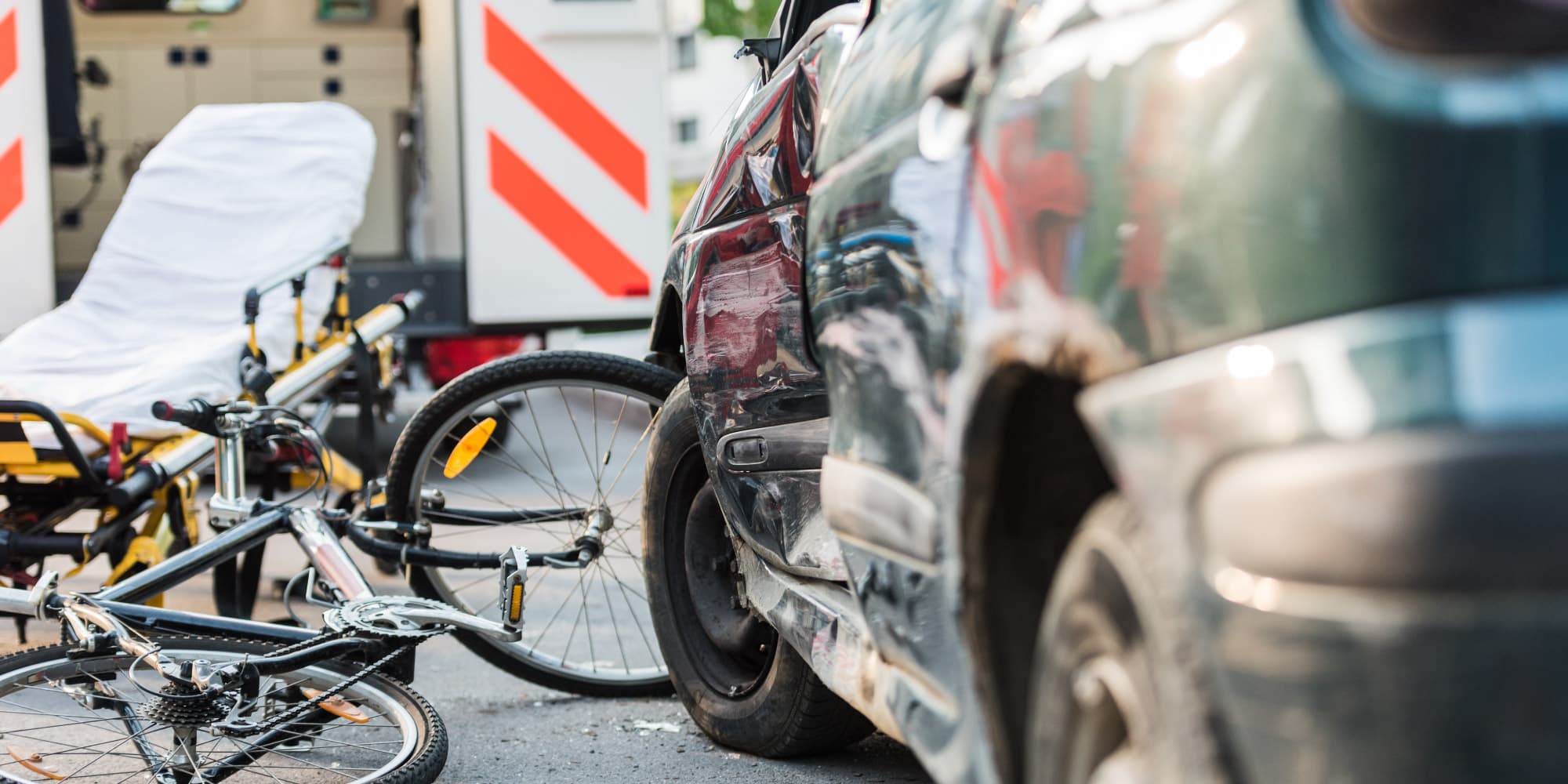
Between 2017 and 2021, 10% of all traffic accidents and 14% of all fatal traffic accidents in Belgium occurred near or at road works.
Such accidents disproportionately affect vulnerable road users. This is especially true in urban areas, where pedestrians and cyclists account for 40% of injuries sustained around road works. As Flanders plans extensive improvements on public roads in the coming years, these numbers are even expected to rise.
At the same time, the public ‘All for Zero’ campaign aims to eliminate traffic fatalities by 2050, making the safety of vulnerable road users a priority. Therefore, the safety challenges at road works must be urgently addressed.
Current traffic management systems are not well equipped to handle road works. By nature, road works require ad hoc measures that are difficult to integrate efficiently into existing traffic management frameworks. In addition, they create specific challenges, such as potentially hazardous new traffic patterns both at the work site and along detour routes, as well as accelerated wear on roads that are not designed for heavy vehicles.
More broadly, existing systems offer limited capabilities for protecting vulnerable road users. They often lack advanced detection technologies, real-time data integration, and reliable safety assessment tools.
The STREAMS project aims to improve the safety of vulnerable road users and road workers at and near road works, while assessing the impact of roadworks on traffic patterns and road condition on nearby roads. Its goal is to provide data-driven insights that guide policy decisions, enhance infrastructure, and improve overall road safety.
Leveraging technology and data to improve road safety
The STREAMS consortium will advance the state-of-the-art of traffic data collection to prevent accidents, mitigate risks, and remedy the unsafe situation around road works:
- Prevent accidents by monitoring interactions between vulnerable road users and traffic, and by analysing broader traffic patterns to identify risks.
- Mitigate risks by using both a site-level and network-level analysis for proactive infrastructure and routing adjustments.
- Remedy safety by using the real-time tracking and monitoring system to draw up data-driven remediation plans.
The project integrates multi-site sensor fusion, camera and LiDAR-based tracking, real-time traffic management, and AI-driven analytics.
STREAMS introduces several key developments
- Detecting and tracking pedestrians, cyclists, and road workers, in real-time and using multi-modal sensor fusion (RGB, thermal, and LiDAR) for improved accuracy (< 1 m). The idea is to detect and track the paths of vulnerable road users and differentiate between them and the general traffic to allow for targeted safety measures.
- Monitoring the road condition using high-resolution LiDAR scanning for early detection of damaged road surfaces. Additionally, a periodic infrastructure mapping will allow assessing road degradation and potential hazards.
- Integrating real-time traffic management and prediction. This includes integrating data from road works into navigation systems and traffic management platforms. Traffic patterns will be analysed using AI to optimise detours and reduce congestion. Simulation-based safety assessments are designed to guide policy and infrastructure improvements.
- Leveraging citizen engagement and crowd-sourced data. User-generated reports are used to flag unexpected detours and safety concerns. Combining such community feedback with AI-driven anomaly detection results in contextual traffic insights.
- Working towards efficiency and cost reduction. This includes developing low-power AI algorithms for real-time sensor fusion and data processing and optimising sensor placement to reduce installation and operational costs.
Societal and economic benefits
- Reduction in traffic accidents: A 1% reduction in accidents with vulnerable road users could save up to €130 million per year.
- Improved traffic flow: Better road work management could reduce congestion and economic losses from delays.
- Data-driven policy making: Insights from the project could support the implementation of more effective safety measures.
- Scalability and market potential: The global road safety market is growing at 10% annually, positioning STREAMS as a viable traffic management solution.
“STREAMS enhances road safety around road works by integrating multi-modal sensor fusion, AI-driven analytics, and real-time traffic management. It improves vulnerable road user protection, monitors road conditions, and optimises traffic flows through data-driven insights. This will allow smarter infrastructure planning and policymaking for safer mobility.”
STREAMS
STREAMS wil de veiligheid van fietsers en voetgangers in en rond wegenwerken monitoren en verbeteren, verkeers- en veiligheidsindicatoren in kaart brengen, en gegevens vertalen naar gerichte beleidsmaatregelen.
STREAMS is een imec.icon onderzoeksproject gesteund door imec en het Agentschap Innoveren & Ondernemen (VLAIO).
Het project is gestart op 01/06/2025 en loopt tot 31/05/2027.
Project information
Industry
- Be-Mobile
- Rear Window
- Siemens Industry Software
- Teledyne FLIR
- Transport & Mobility Leuven
- XenomatiX
Research
- GIS&T – UGent
- imec – AIA
- imec – IPI – UGent
Contact
- Project lead: Stefan Schulte
- Research lead: Brian Booth
- Proposal manager: Wilfried Philips
- Innovation manager: Ljiljana Platisa